Space Planning
Making Room for a Table Lamp on the Stair Landing
A stair landing is often left visually unfinished even though it occupies a surprisingly prominent position. It may be visible from the hall, framed by the stair rails from below and encountered at close range on the way down. A small pool of light can make the area feel considered after dusk, giving a picture, a textured wall or a modest table more presence.
The challenge is that a landing is circulation space before it is decorating space. A table and lamp belong there only if they leave enough room for people to pass without edging around them, catching a sleeve or stepping over a cord. Success depends on reading the landing in three dimensions: its depth, direction of travel, nearby doors and the changing eye line between floors.
Measure the route, not just the empty corner
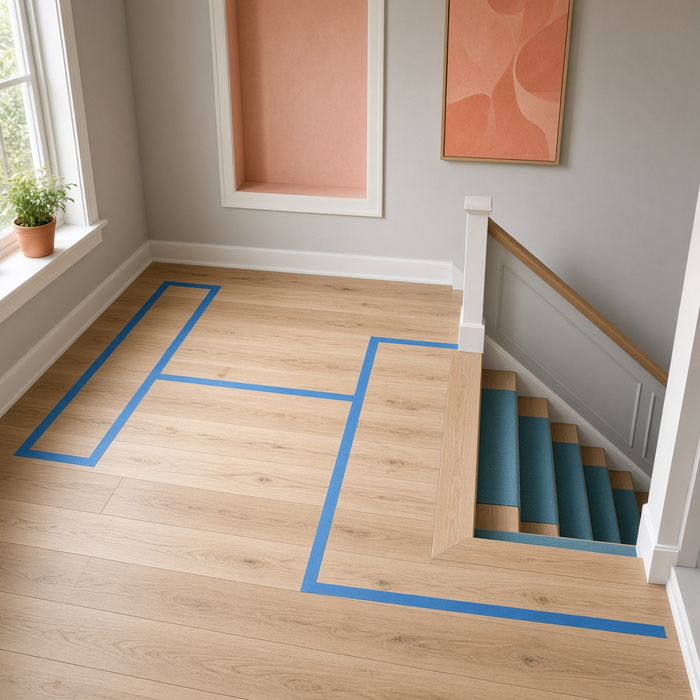
Begin by measuring the full depth and width of the landing, then mark the path people naturally take through it. The usable decorative zone is what remains outside that path. A landing may look broad from below yet feel tight when two people pass or a door swings into the space. Do not rely on a general minimum copied from elsewhere; building and accessibility requirements vary. Check the rules that apply to your home and preserve the clearance needed for comfortable movement.
Use low-tack painter's tape to mark the proposed table footprint on the floor, pressing every edge fully flat so none can lift underfoot. Keep the normal stair lighting on, walk the stairs in both directions and make the turn at an ordinary pace. Notice whether a hip, hand or bag enters the outline. If movement requires a sidestep or a tighter turn, the furniture footprint is too generous. Remove the tape as soon as the check is complete.
Let the table follow the architecture
On a shallow rectangular landing, a narrow console usually sits more quietly than a round pedestal because its back can align with the wall. A deeper square landing may accept a compact round table, but its widest point still projects into circulation. Consider the legs as well as the top: splayed feet can occupy more floor than the visible surface suggests, while a top-heavy table could tip if someone contacts it on the stair route.
Stability is a firm requirement. The table must not rock or tip under normal contact, and the lamp base must sit fully on the top with space around it. Reject a position on unstable flooring or across a rug edge rather than trying to disguise the problem with styling.
Use the lamp's real dimensions to plan the vignette
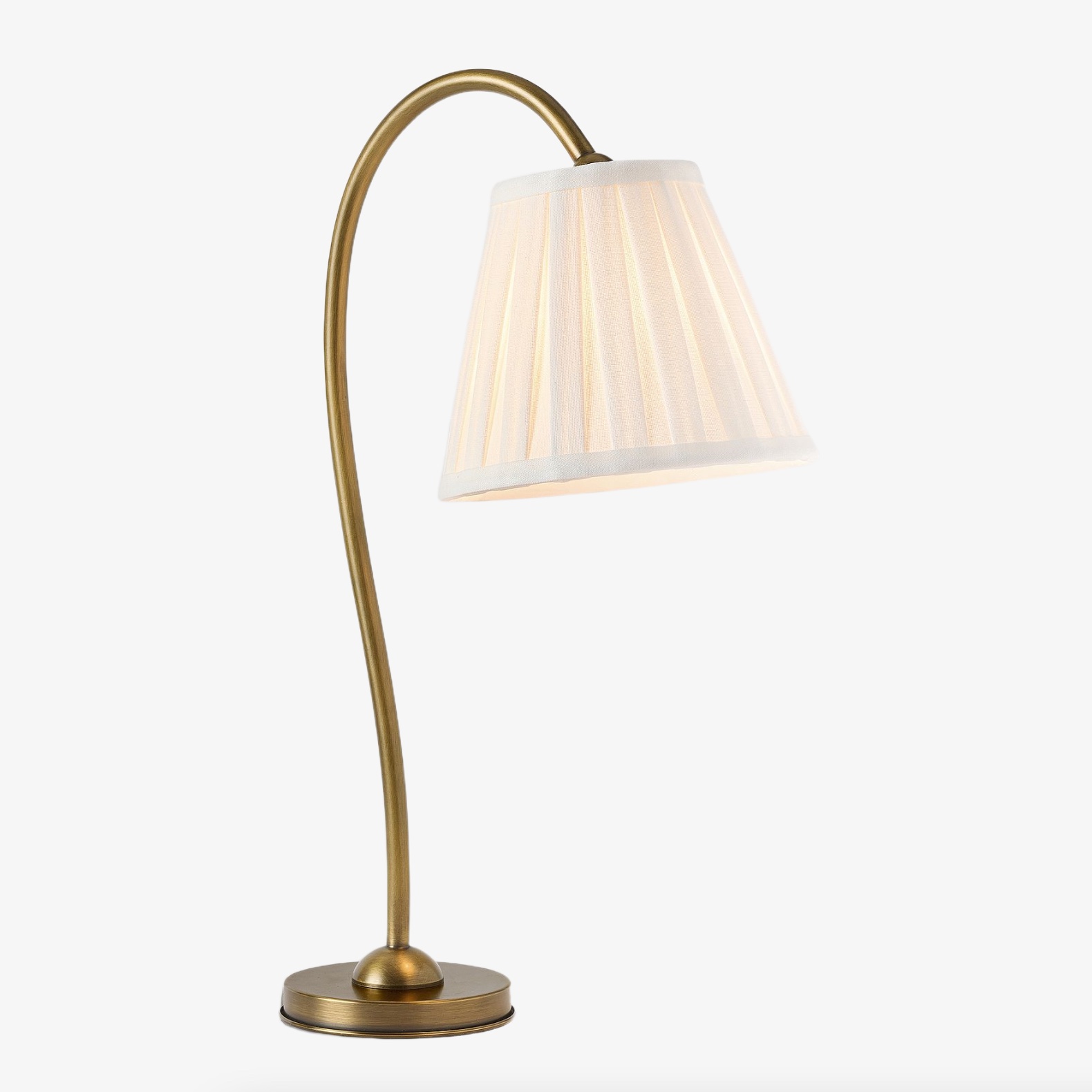
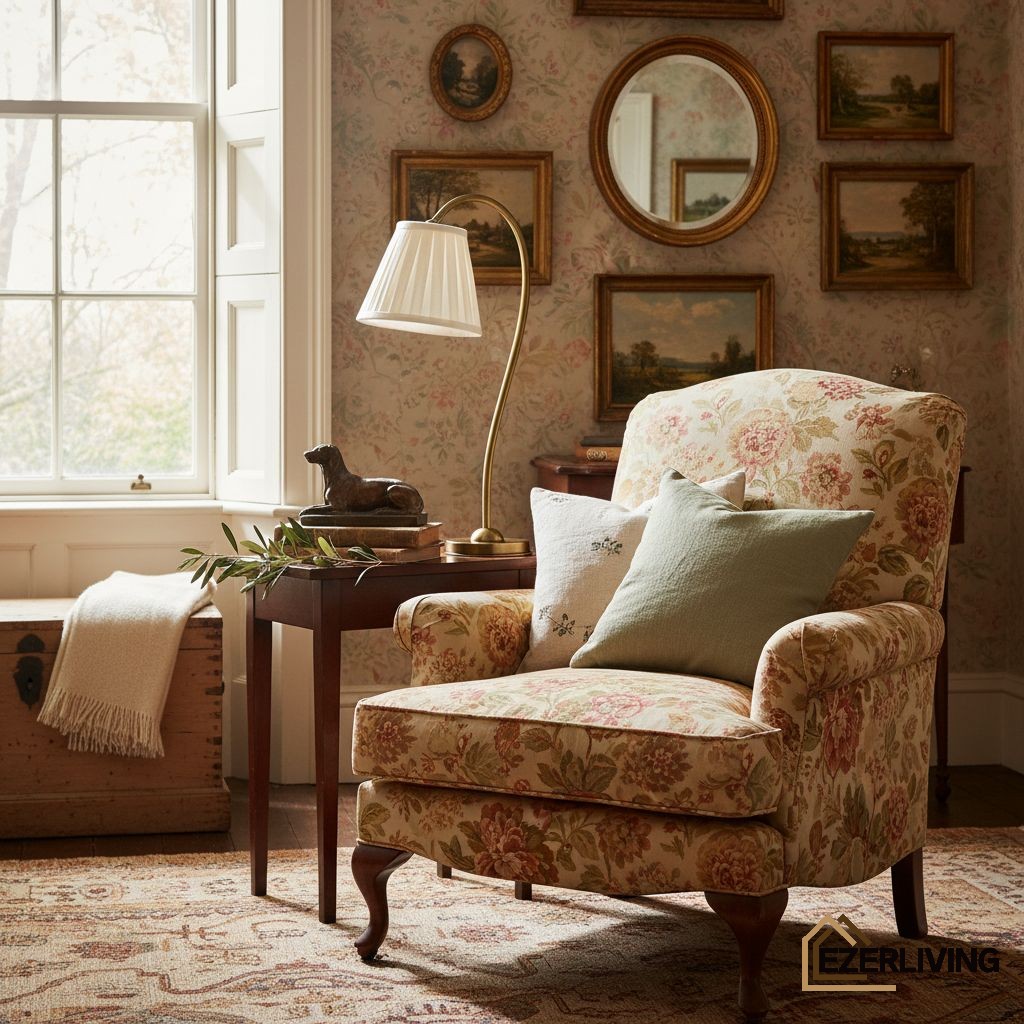
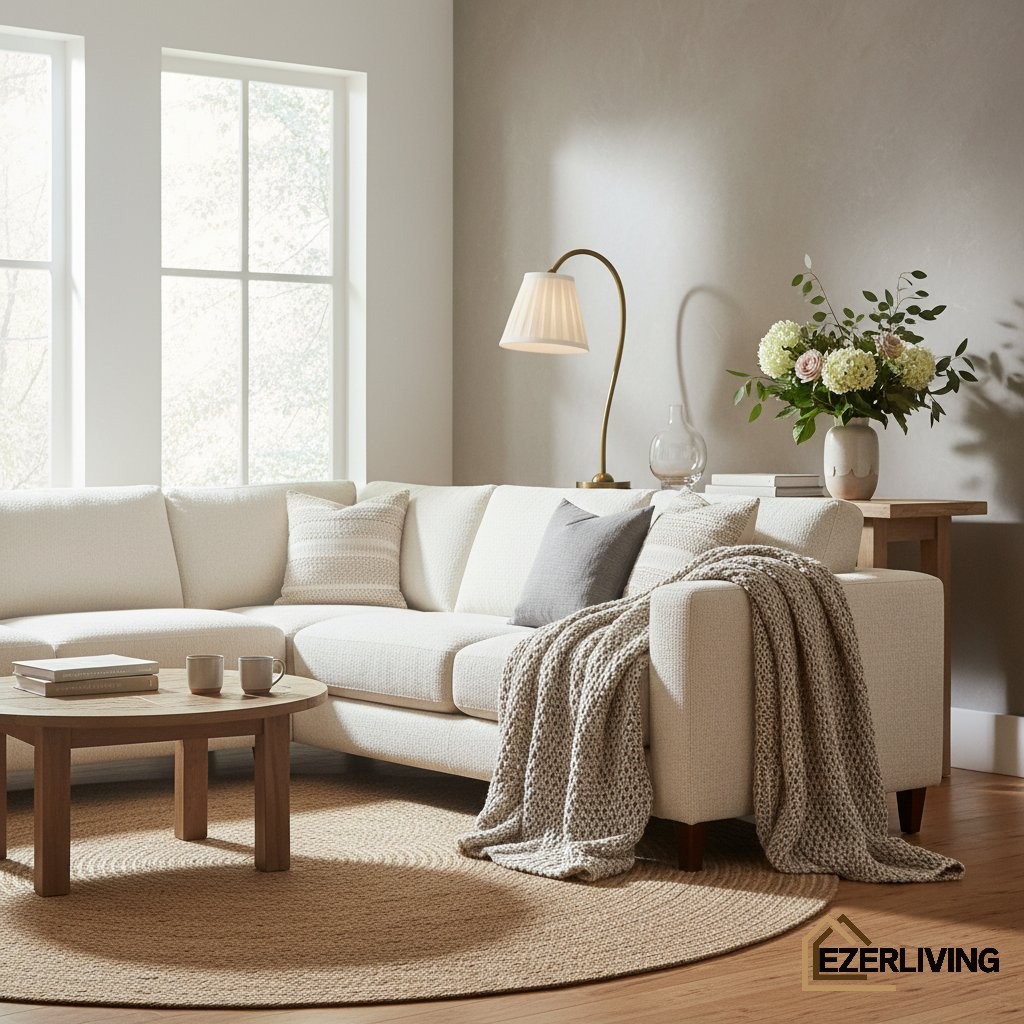
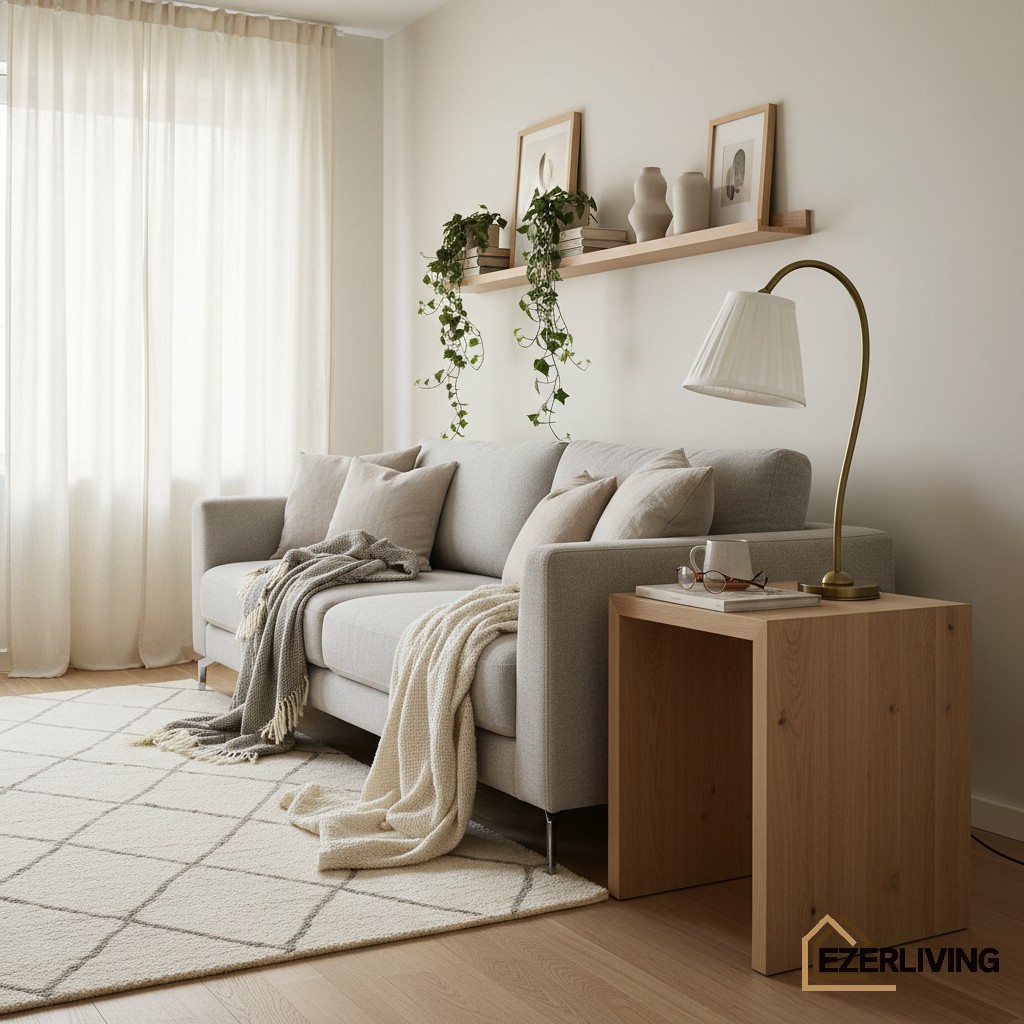
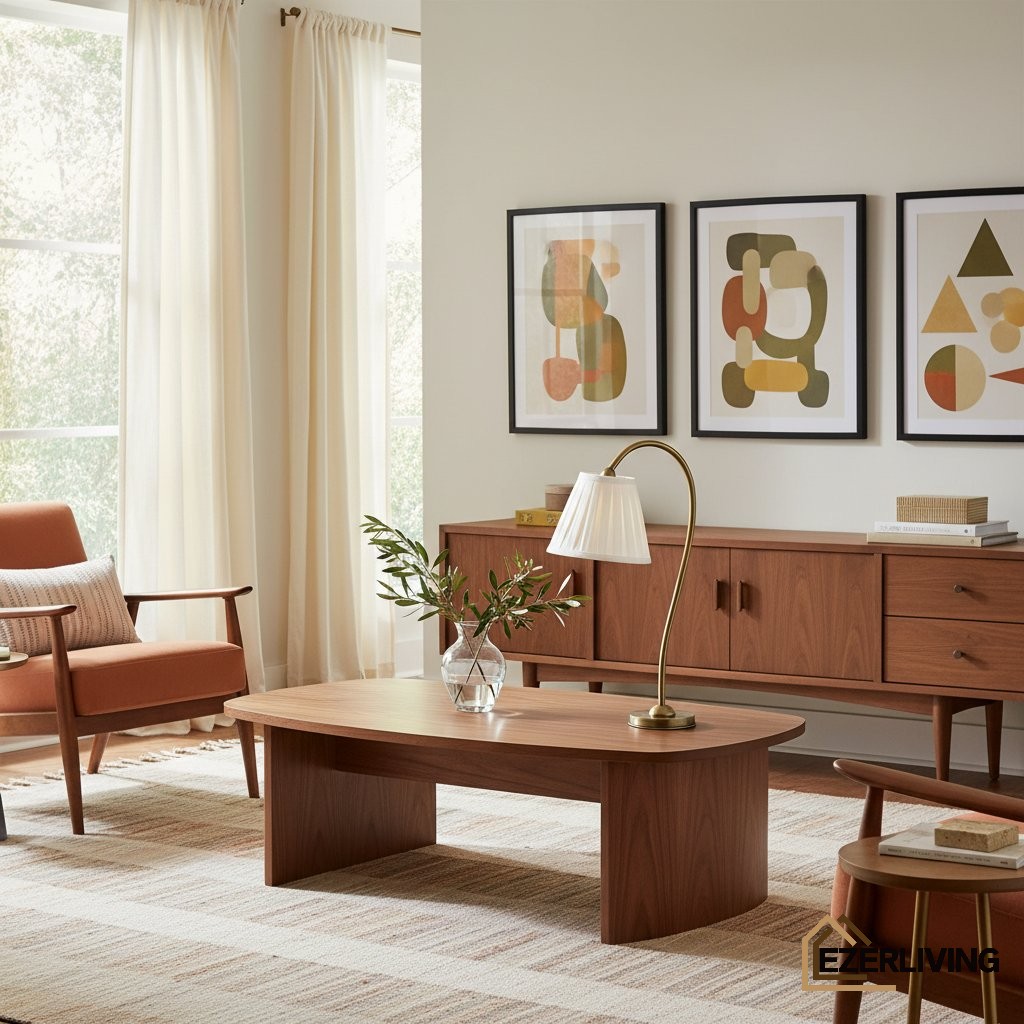
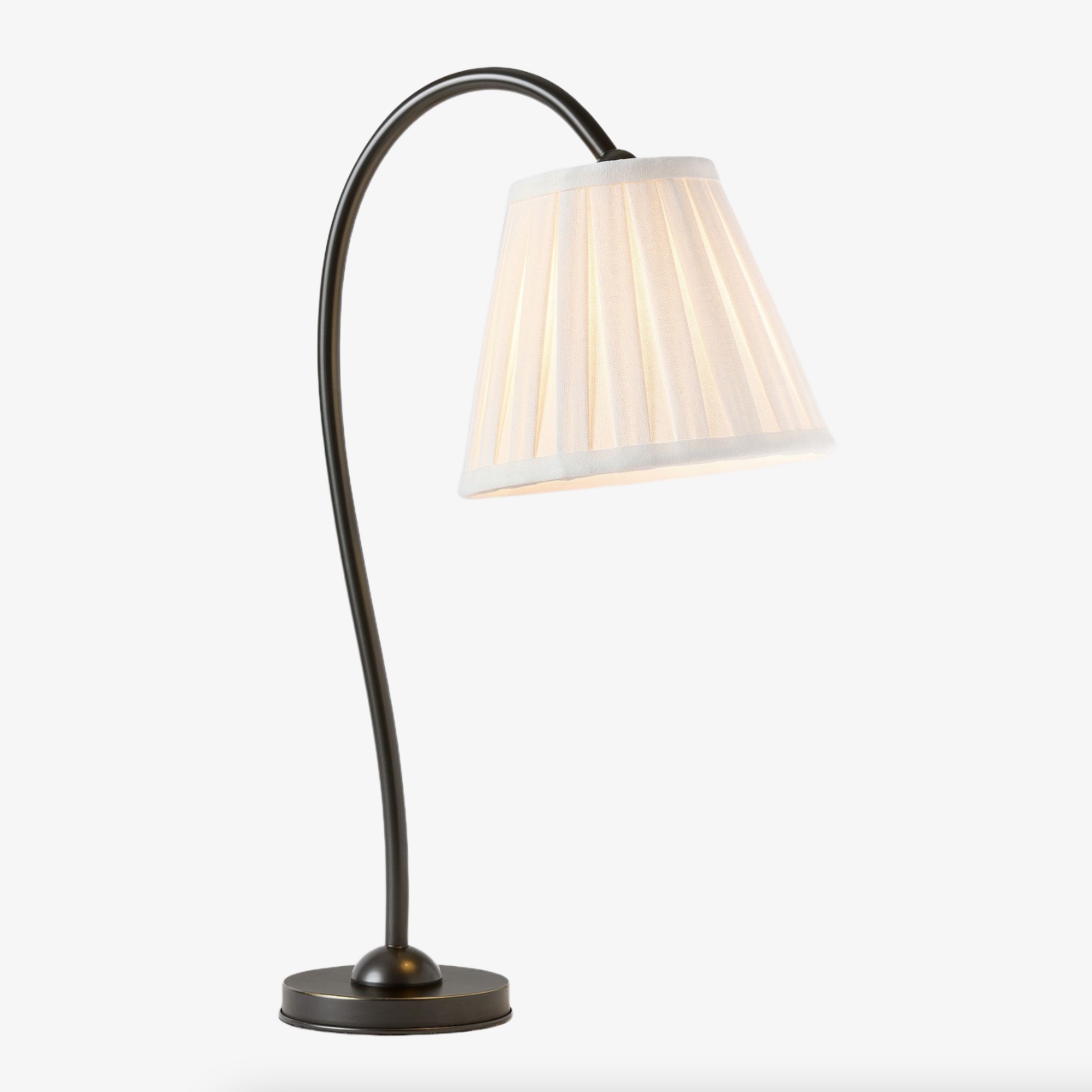
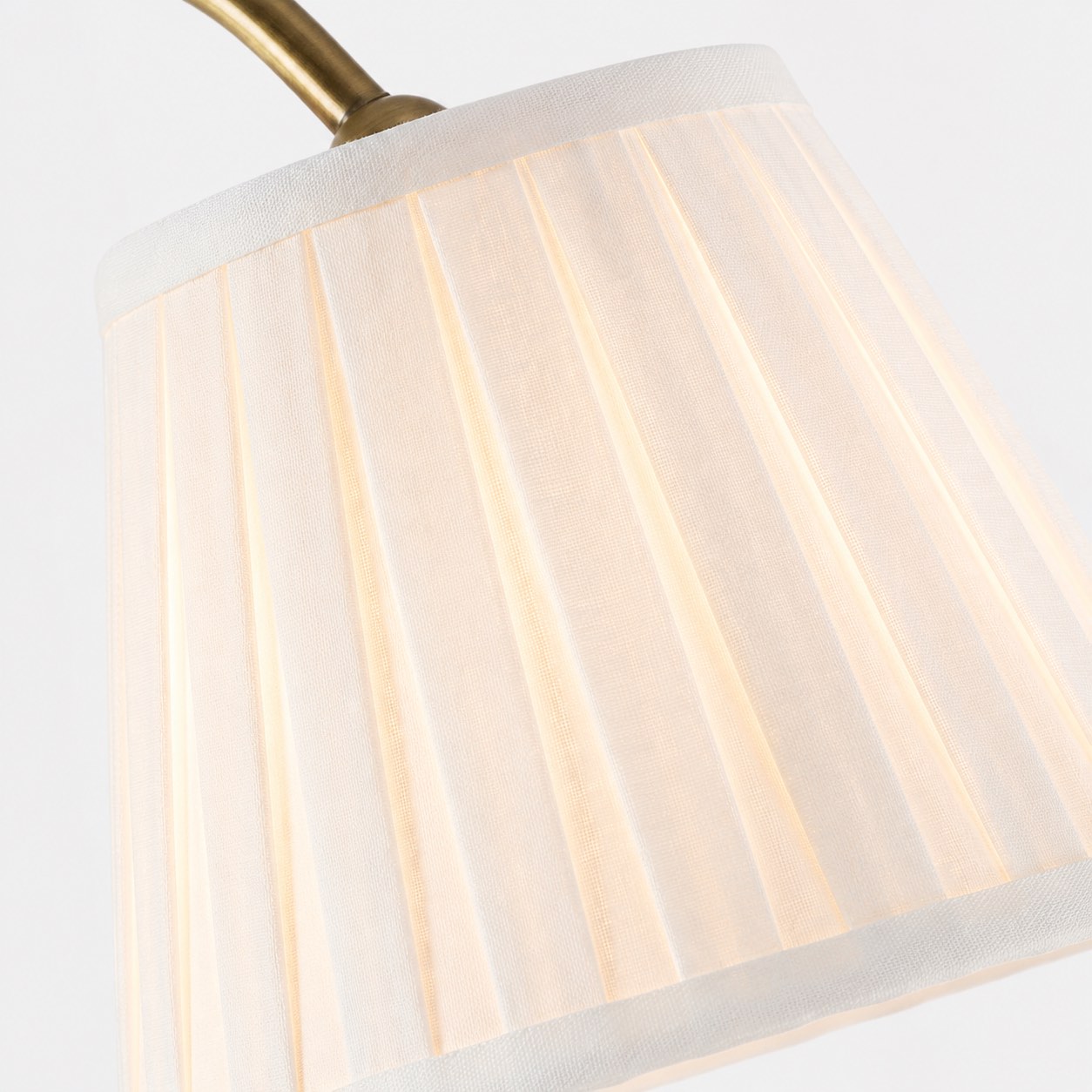
The Luvora Textured Pleated Shade Table Lamp has official dimensions of 22.7 cm wide, 12.7 cm deep and 50.8 cm high. Its narrow depth is helpful on a slim surface, but the 22.7 cm width still needs to be drawn into the plan. Tape a 22.7-by-12.7 cm rectangle on the proposed tabletop, then add a paper silhouette rising 50.8 cm. This mock-up reveals whether the shade crowds a picture frame, meets the slope of the stair or intrudes between balusters. Check the verified lamp dimensions and footprint against that tabletop plan.
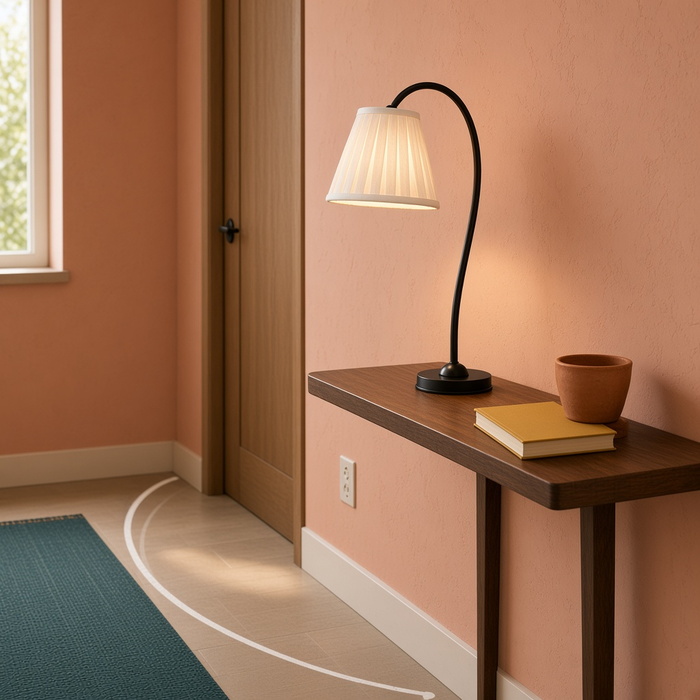
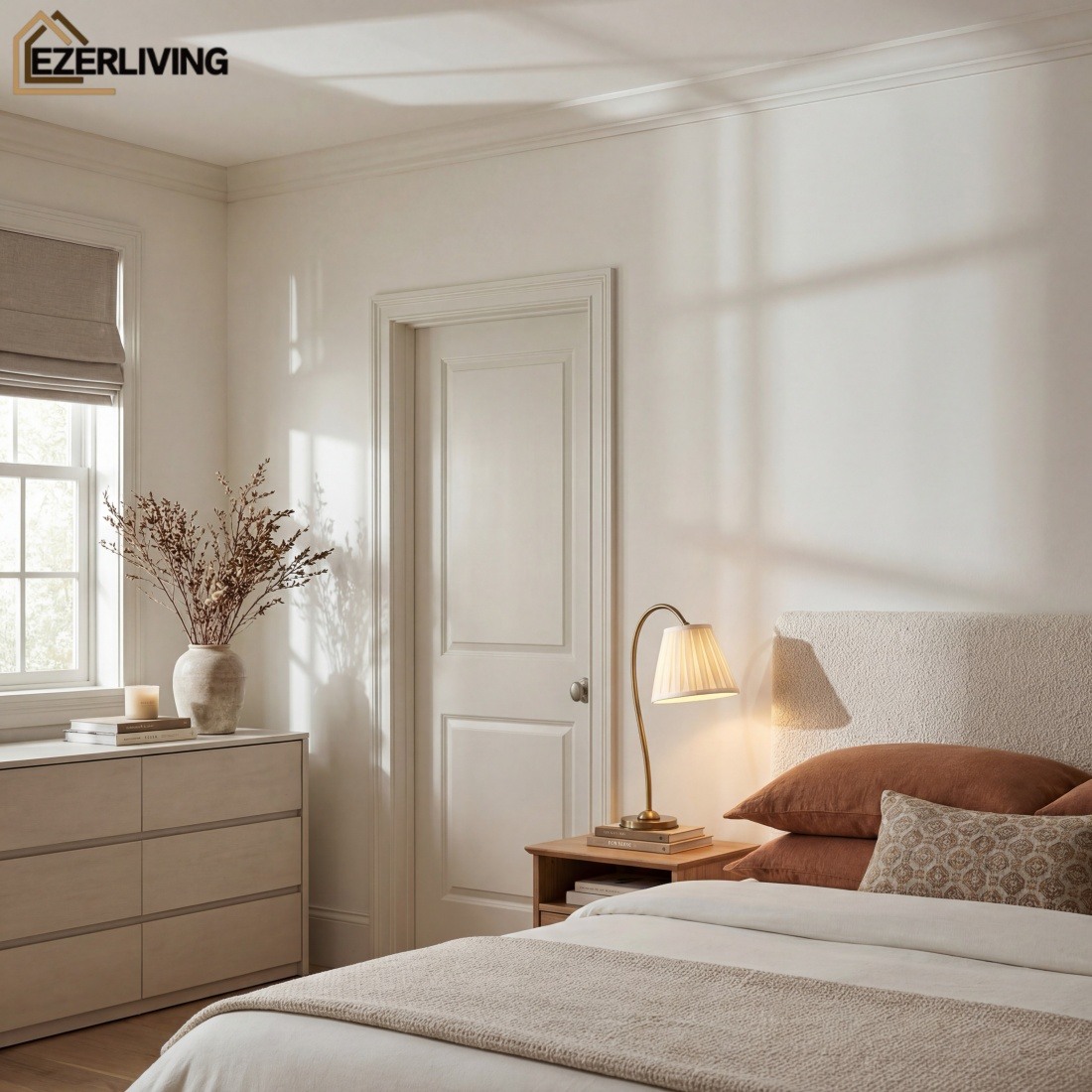
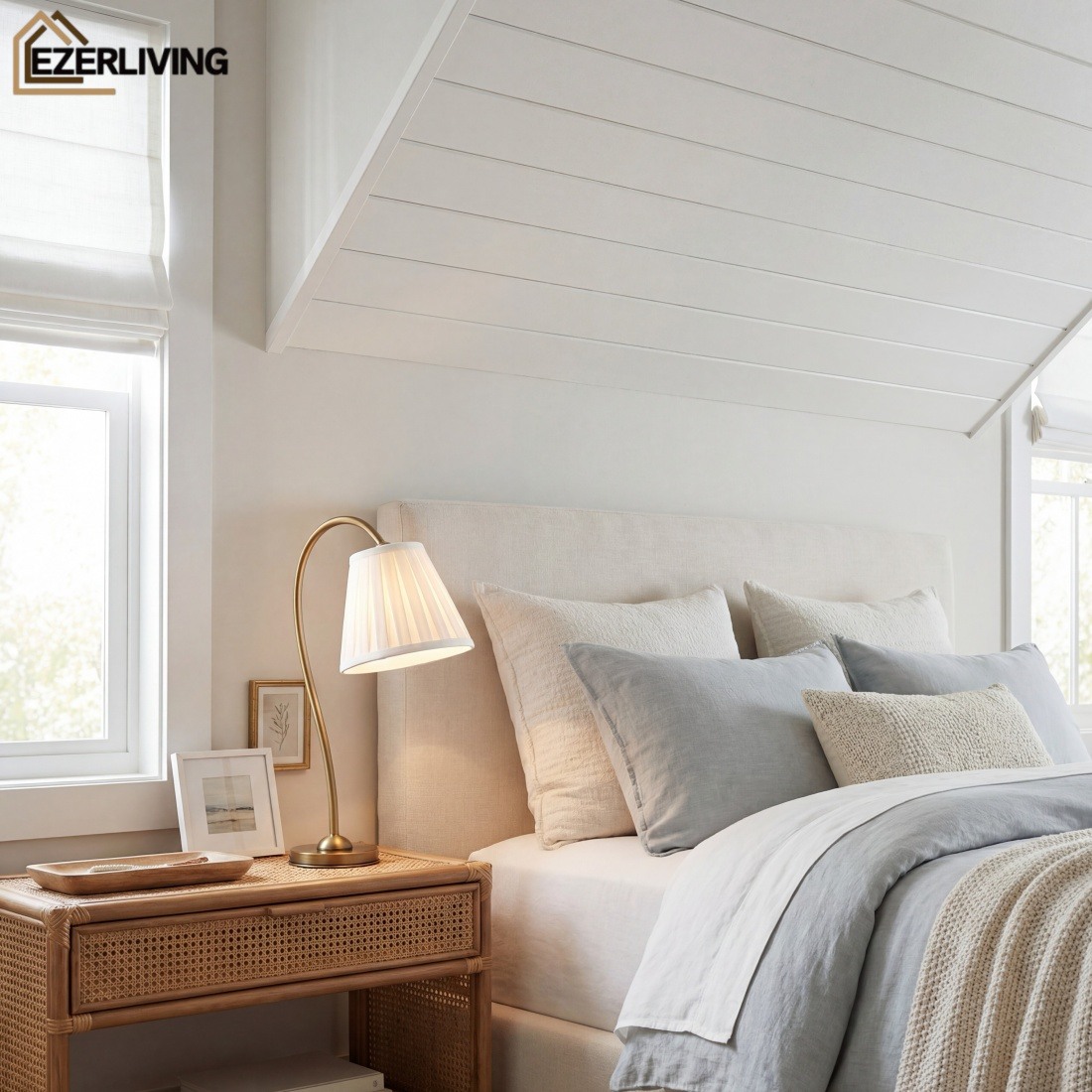
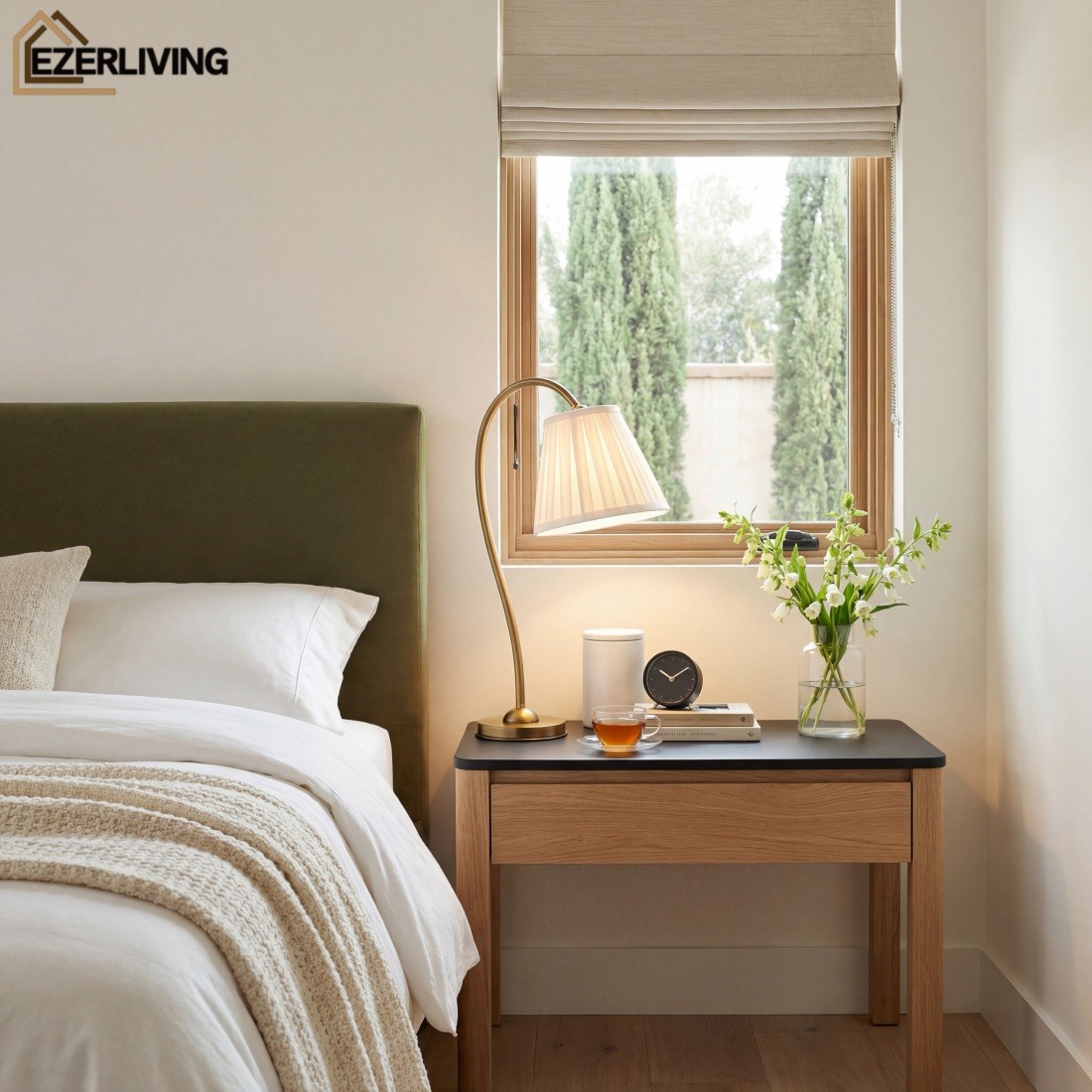
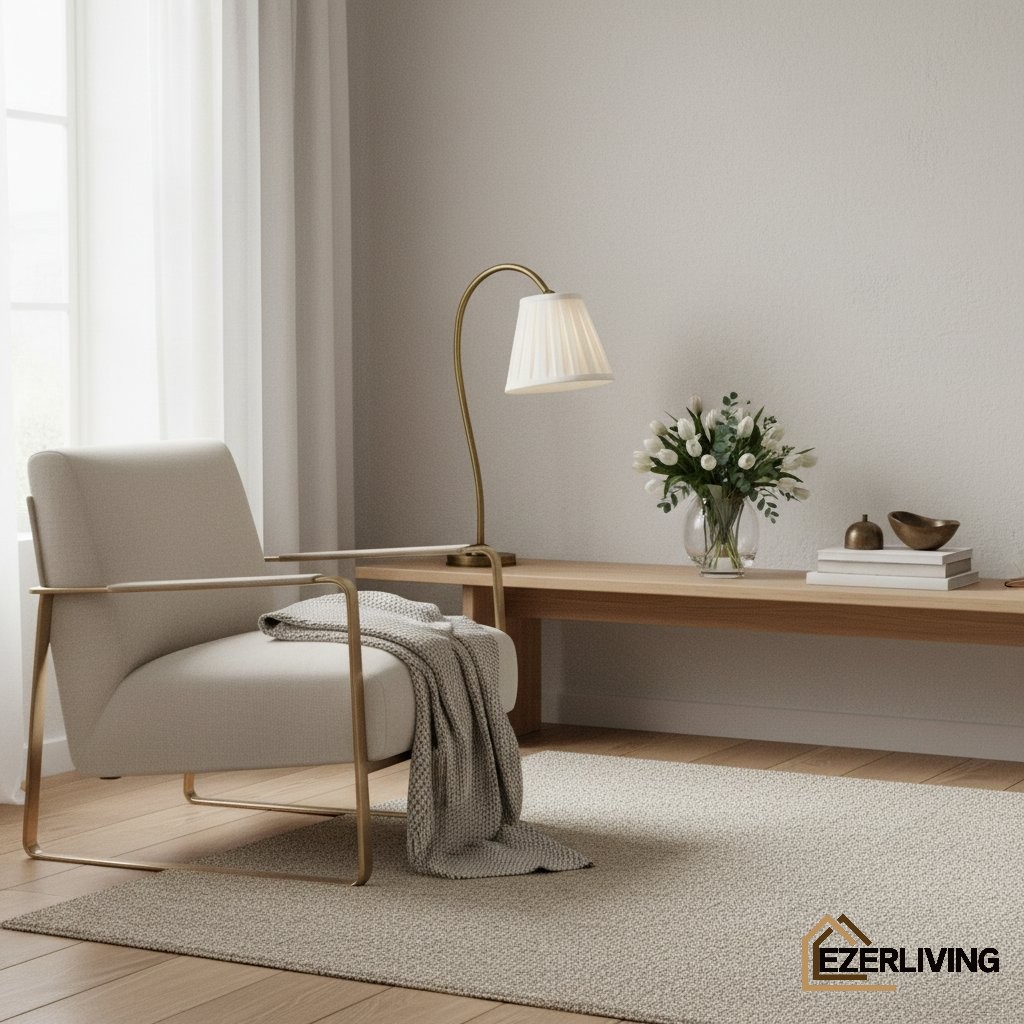
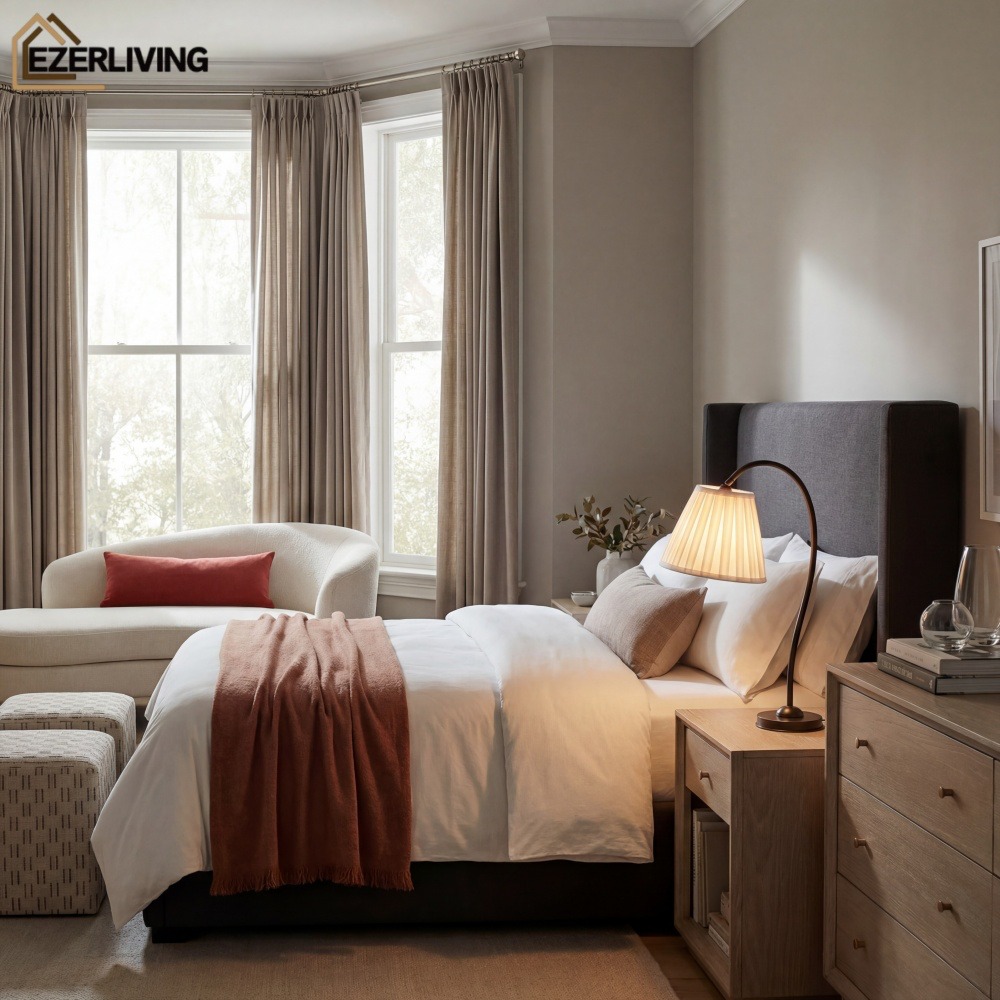
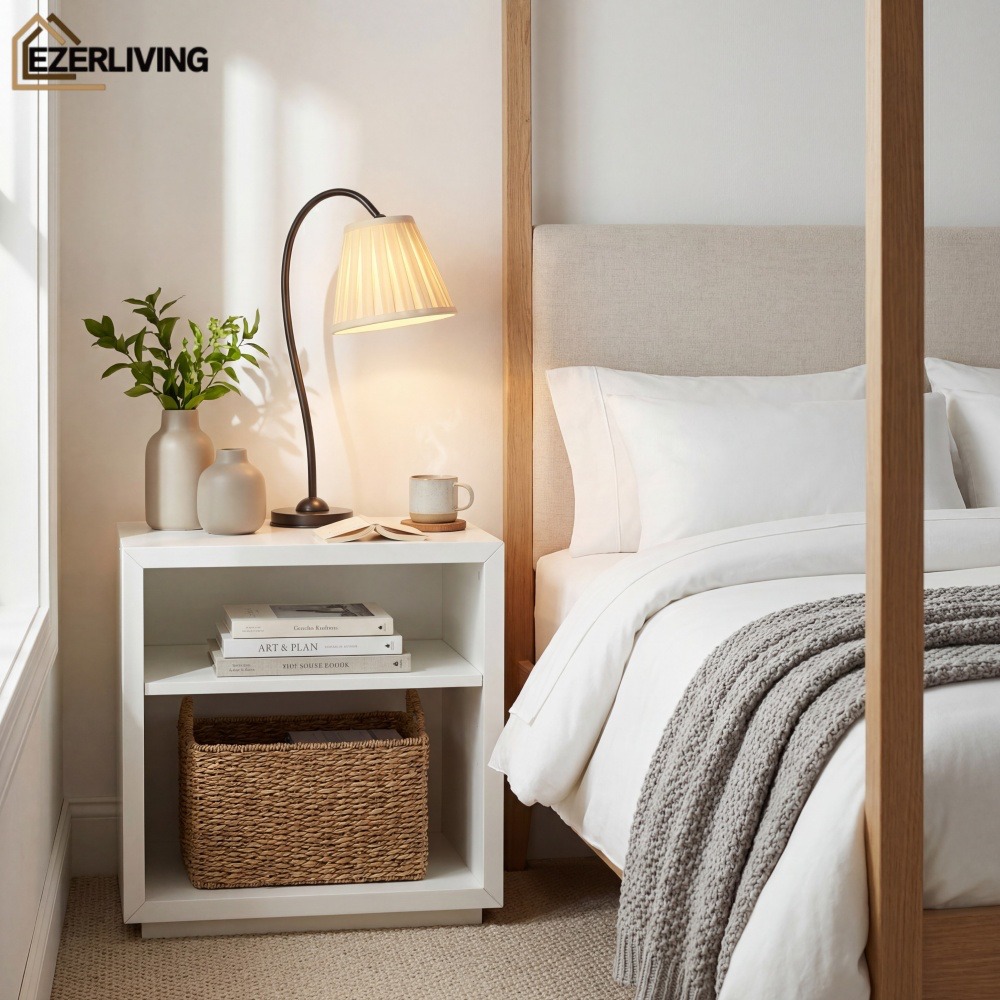
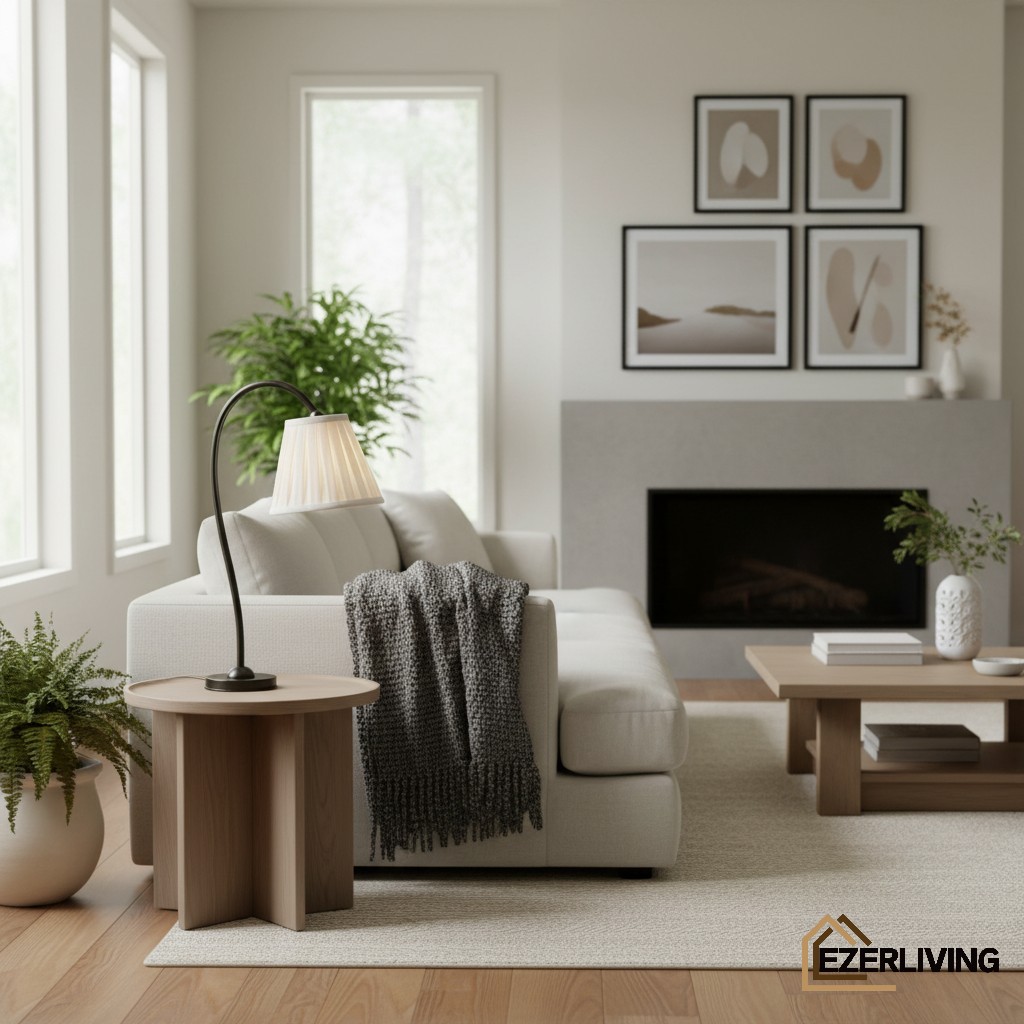
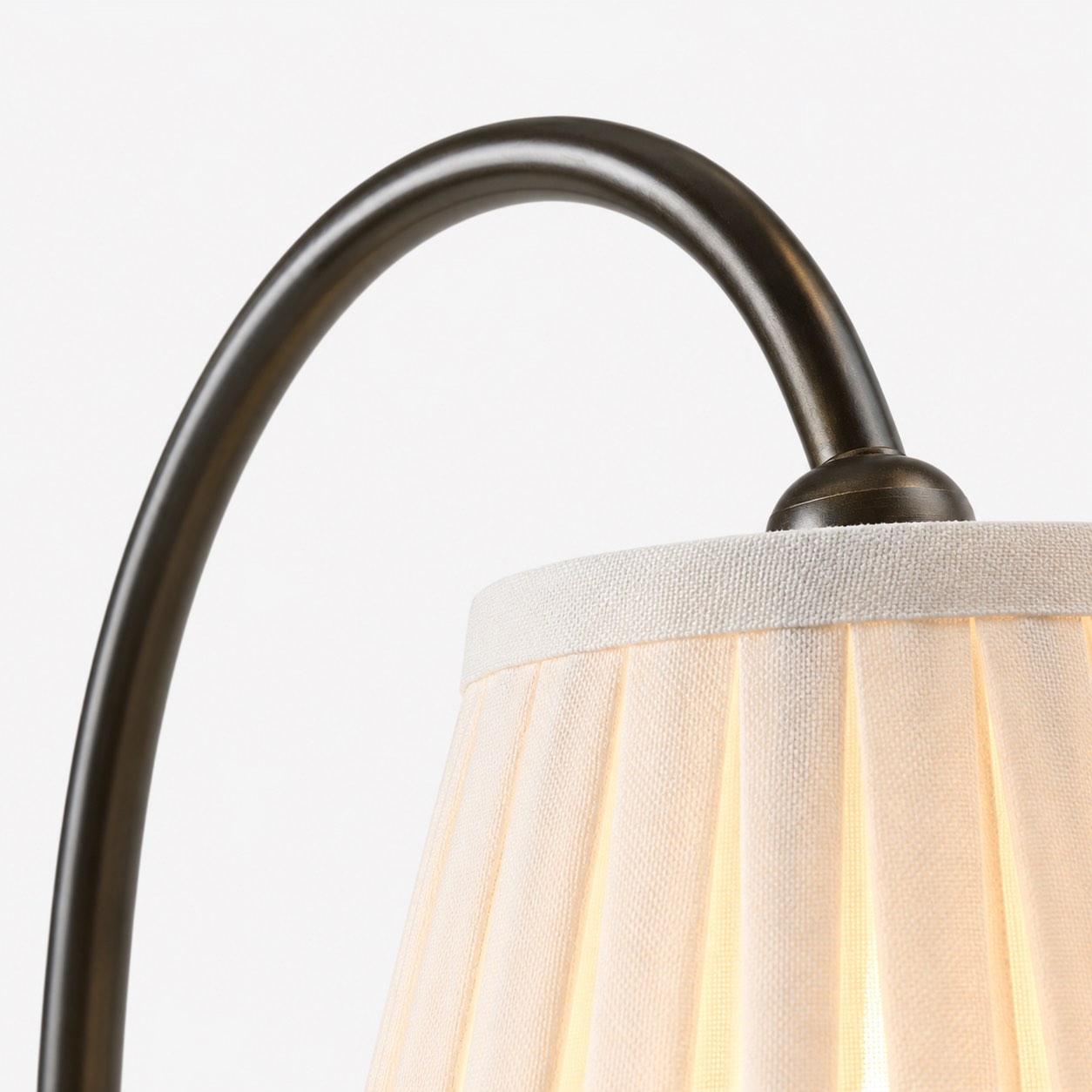
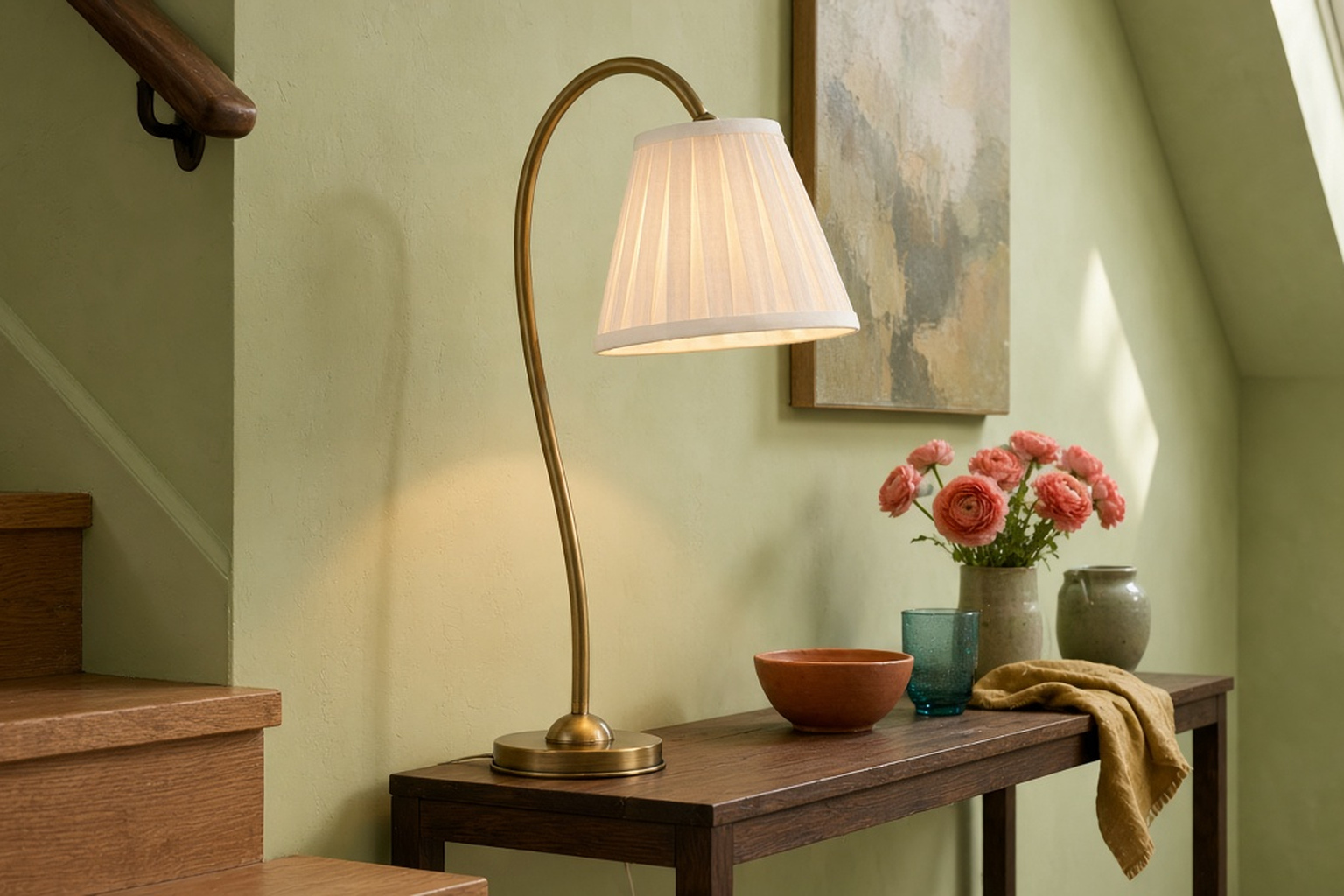
The lamp combines a slim metal silhouette with a textured pleated linen shade. Metal gives the arrangement a clear line, while pleats add enough softness to register from the opposite floor. Resist packing the remaining surface. One low ceramic bowl or a small group of books is plenty if it does not compromise the lamp's footing. Tall branches can make the composition unstable and confuse the sightline.
If dust settles quickly here, the companion guide Pleats Look Beautiful Until Dust Moves In: How to Clean a Fabric Lampshade Safely offers the right maintenance context.
Compose for the view from above and below
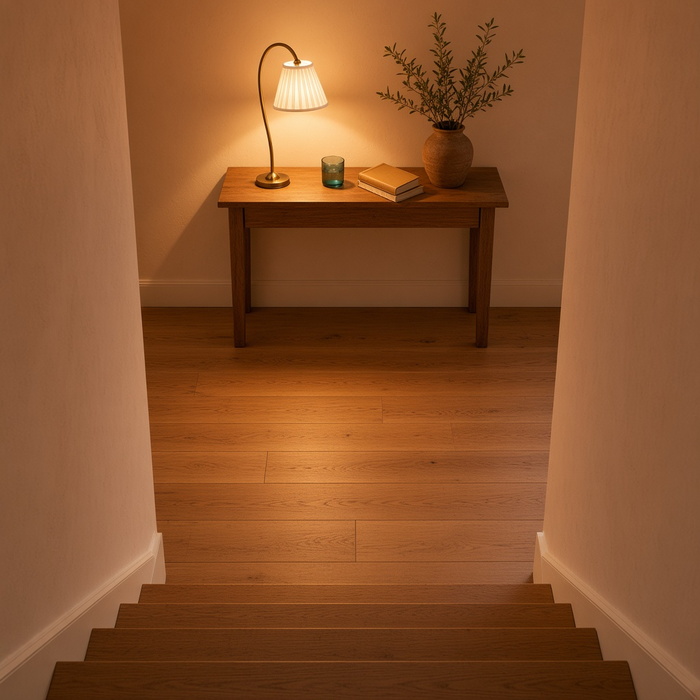
A landing arrangement is rarely seen straight on. From downstairs, the lamp may appear against a wall, through rails or beneath framed art. From upstairs, viewers may look down onto the shade and tabletop. Stand at the first and last few treads and photograph the proposed position at eye height. These views often expose a base hidden by the table apron, a shade clipped by the handrail or clutter visible only from above.
Use the wall as part of the composition. A single artwork can align the lamp and table with the wall, but keep enough space between the shade and frame so their outlines do not overlap. On a tall stair wall, a small picture positioned only in relation to the table may appear too low or undersized when viewed from below. A restrained group can connect the levels, provided the lamp remains the evening focal point.
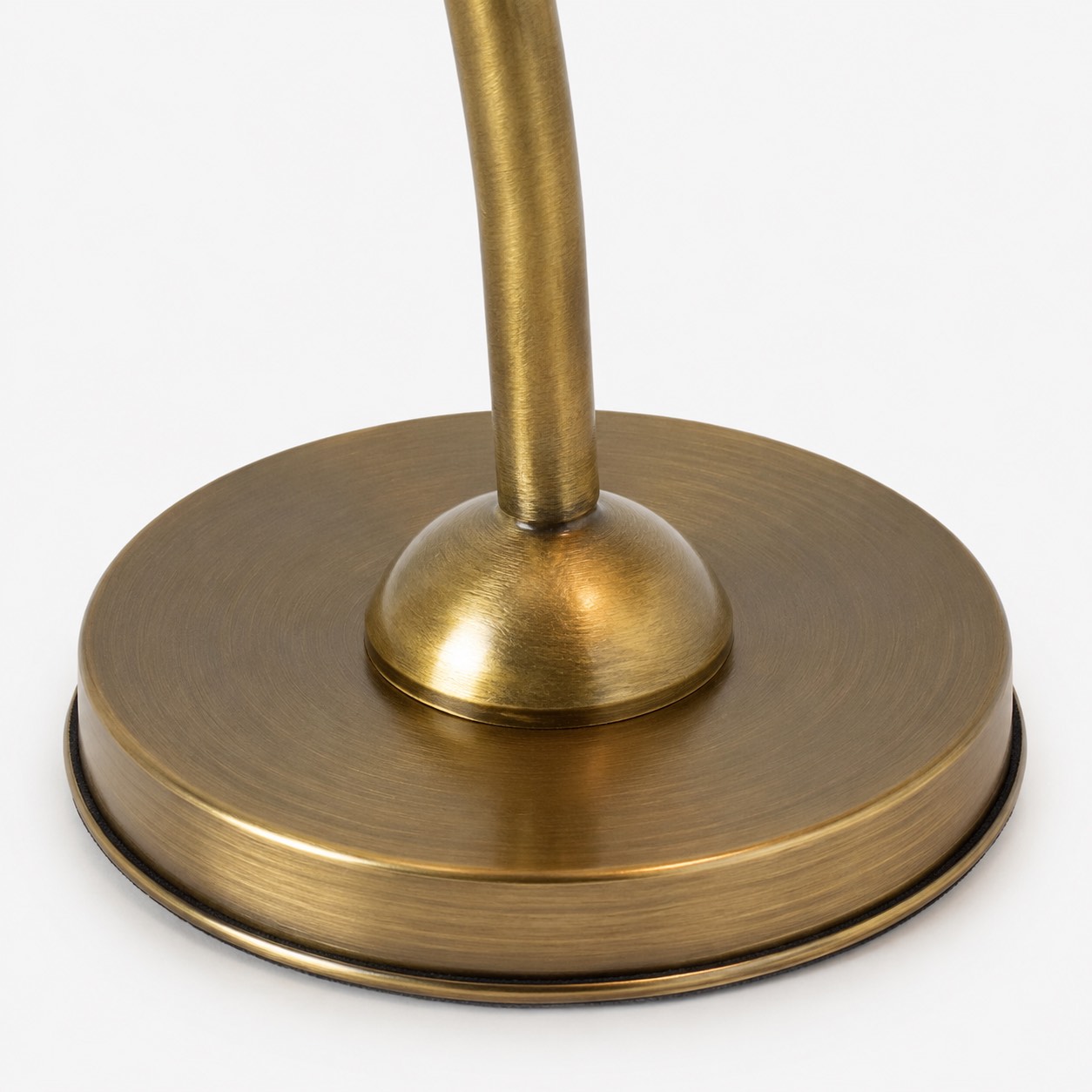
A warm metal lamp, linen shade, painted timber and one simple ceramic piece can suggest country character without slogans or deliberately battered finishes. That broader shift is explored in Farmhouse After Shiplap: How Country Lighting Is Moving Beyond Signs and Distressed Decor. The live product controls show Tumbled Brass and Matte Black finish selections; review the official product page and current finish choices before deciding which one suits the wall and stair rails.
Control glare before chasing atmosphere
Stairs continually change the viewer's height in relation to a lamp. A shade that conceals the bulb on the landing may reveal a bright source to someone several steps below. Once the route is completely clear, make an after-dark glare check with the normal stair lighting still on. Examine the proposed lamp position from every approach. The aim is a calm glow, not an eye-level flare that competes with seeing stair edges.
The pleated linen shade may return a soft glow to the wall, but the result depends on the compatible bulb, the wall's colour and finish, and the distance between shade and surface. A pale matt wall nearby may reflect more light than a dark, heavily textured wall farther away. The bulb is not included, so verify compatibility and choose brightness and colour for the landing rather than assuming a particular effect from the shade alone.
A table lamp should supplement, not replace, dependable stair lighting. It can soften the transition between brighter rooms, but the stairs still need illumination appropriate to safe movement.
Resolve the outlet and cord before buying furniture
An attractive arrangement fails if its power route crosses a tread, turn or doorway. Locate the outlet, note each approach and identify every place a cord could meet a shoe, vacuum or moving door. The official product information is inconsistent about the lamp's wiring method, so do not assume how it connects. Confirm the supplied configuration with the retailer and assess the location with a qualified professional where necessary.
An outlet behind the table may keep the power connection away from the main view and walking route, but only the verified configuration and actual site can determine feasibility. Do not improvise a concealed route, trap a cable under unsuitable coverings or stretch a connection across circulation.
When a wall light is the better answer
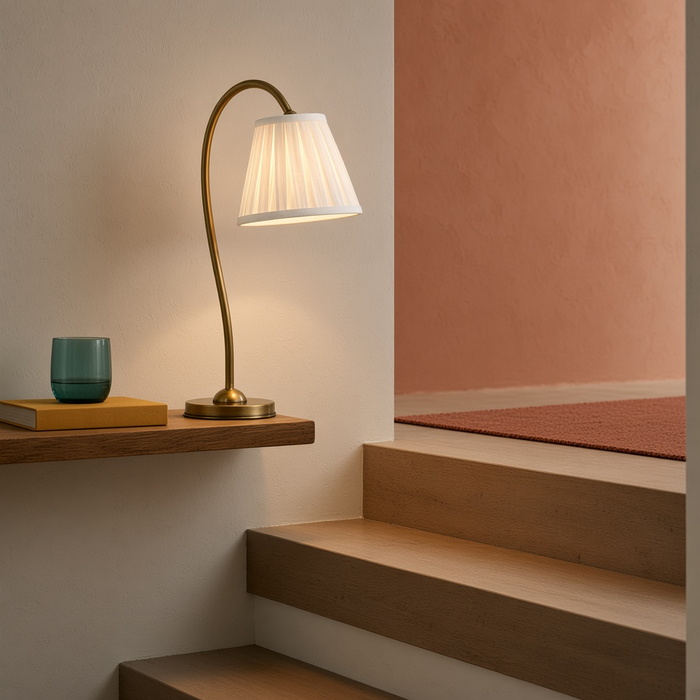
Choose a wall light instead when the landing cannot accept a table without reducing clear movement, when any connection would cross the walking line, or when the lamp could be struck during normal use. A fixed light may also suit a landing where children move quickly, large items regularly travel between floors or the table cannot provide reliable stability. Its installation and placement should be assessed for the building and local requirements.
If the measurements, sightlines, stable surface and power arrangement all work, keep the final decision measured and restrained: compare the product specifications with your landing once more before ordering. Leave the remainder of the tabletop simple and keep the walking route visually and physically clear.
Questions From the Turn in the Stairs
Should the table sit against the wall?
Usually, aligning a narrow table with the wall keeps its footprint legible and preserves the cleanest route. Still, skirting boards, radiator projections, uneven walls and rear table legs can prevent a stable fit. Measure the true projection at floor and tabletop height.
How much should be displayed beside the lamp?
Only what fits without crowding the lamp base or creating objects that can be brushed into the stair path. One low, stable accent often reads better from multiple levels than several small pieces.
Can the lamp be the only light on the stairs?
Treat it as an atmospheric layer, not an automatic substitute for functional stair lighting. Confirm that the stair and landing remain clearly visible under the lighting arrangement appropriate to your home.
What if the shade looks bright from below?
Reconsider table height, lamp position and the compatible bulb choice. If a comfortable view cannot be achieved from the lower treads without compromising useful light, move the lamp or choose a different lighting format.