Trend and Style
Beyond Shiplap and Signs: A Warmer, Wiser Farmhouse
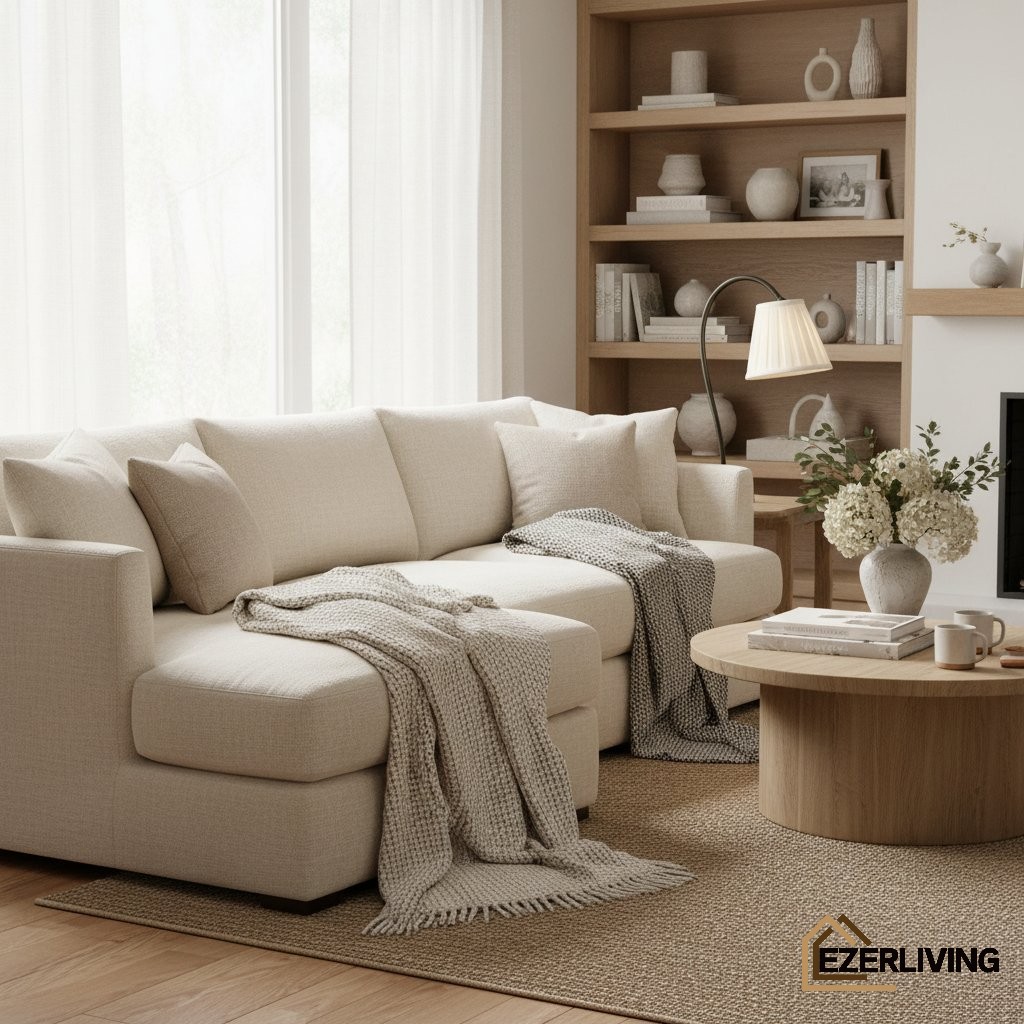
Farmhouse style is not disappearing; it is becoming less literal. The rooms that now feel most convincing have stopped announcing themselves with script signs, decorative windmills and timber made to look older than it is. Instead, they borrow the useful qualities of rural interiors: sturdy materials, familiar shapes, generous textiles and light that makes evening feel settled. Warmth now comes through materials, proportion and the way the room is lit.
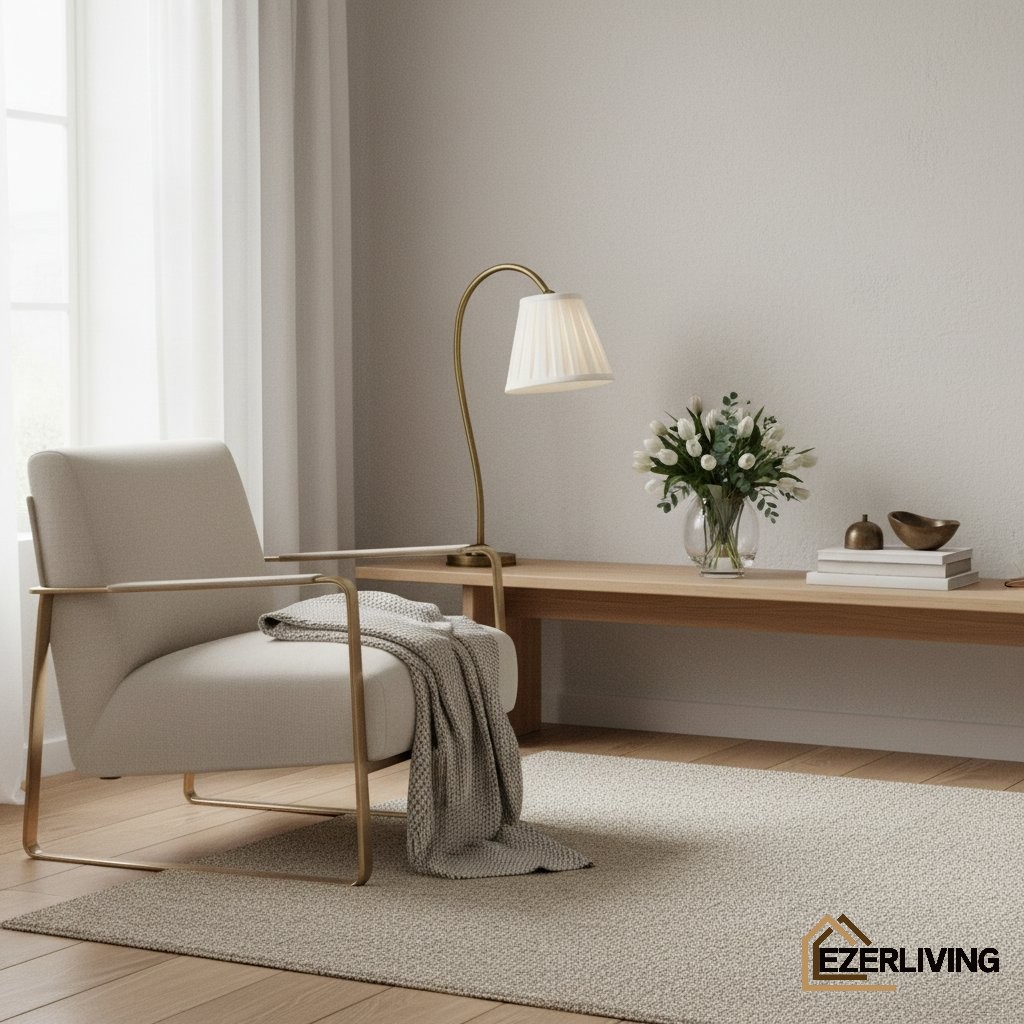
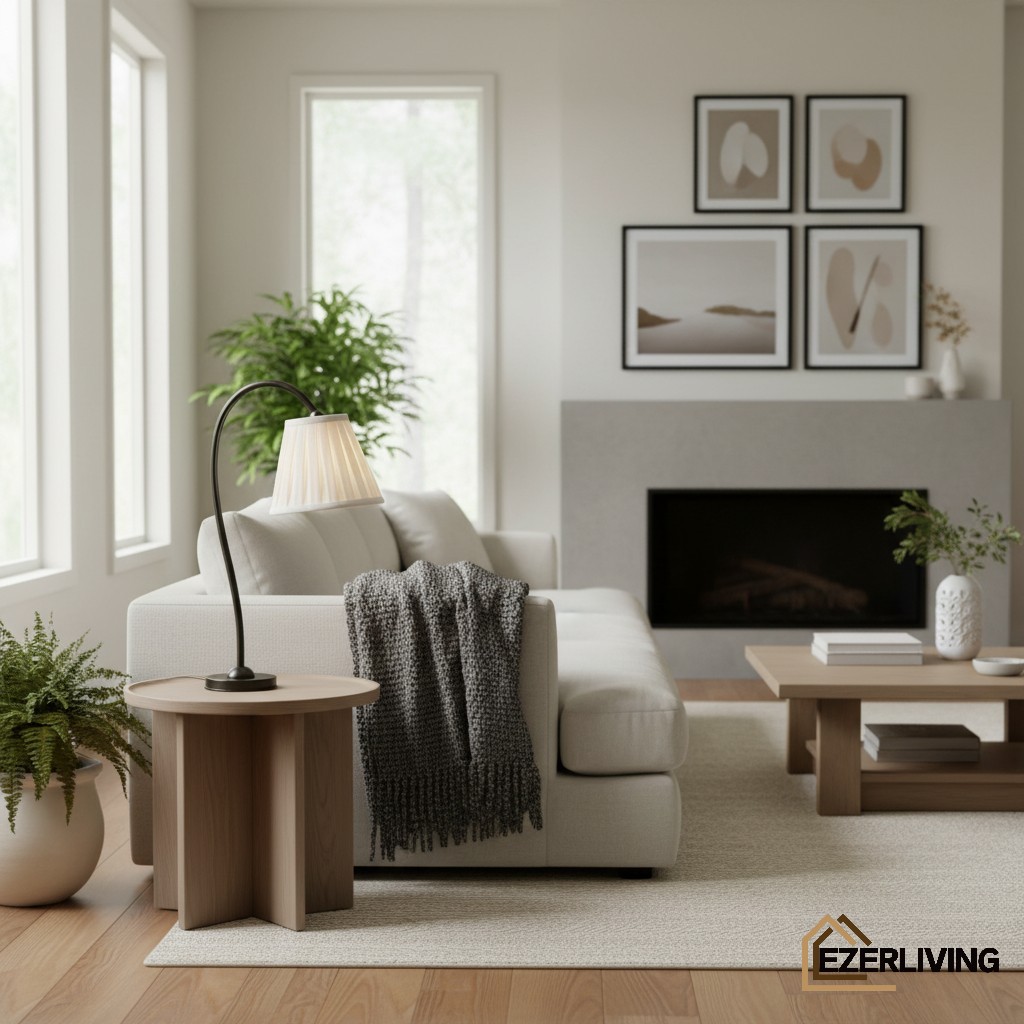
This shift matters particularly in lighting. A lamp occupies little floor space, yet it can determine whether a room reads as quietly collected or insistently themed. Pleated fabric, slender iron and a softened pool of light can suggest country character without reproducing a catalogue of symbols. This version of farmhouse leaves more breathing room, treats materials with greater clarity and is less likely to feel dated after a season.
Why the Old Shorthand Feels So Loud
Shiplap, word art and distressed finishes once offered an immediate route to informality. The problem was repetition. When every wall, tray and cabinet carried the same message, the eye had nowhere to rest. Artificial wear also flattened the distinction between an object that has genuinely aged and one manufactured to perform age. A chipped nineteenth-century stool can be moving; a room full of uniformly sanded edges simply becomes visual noise.
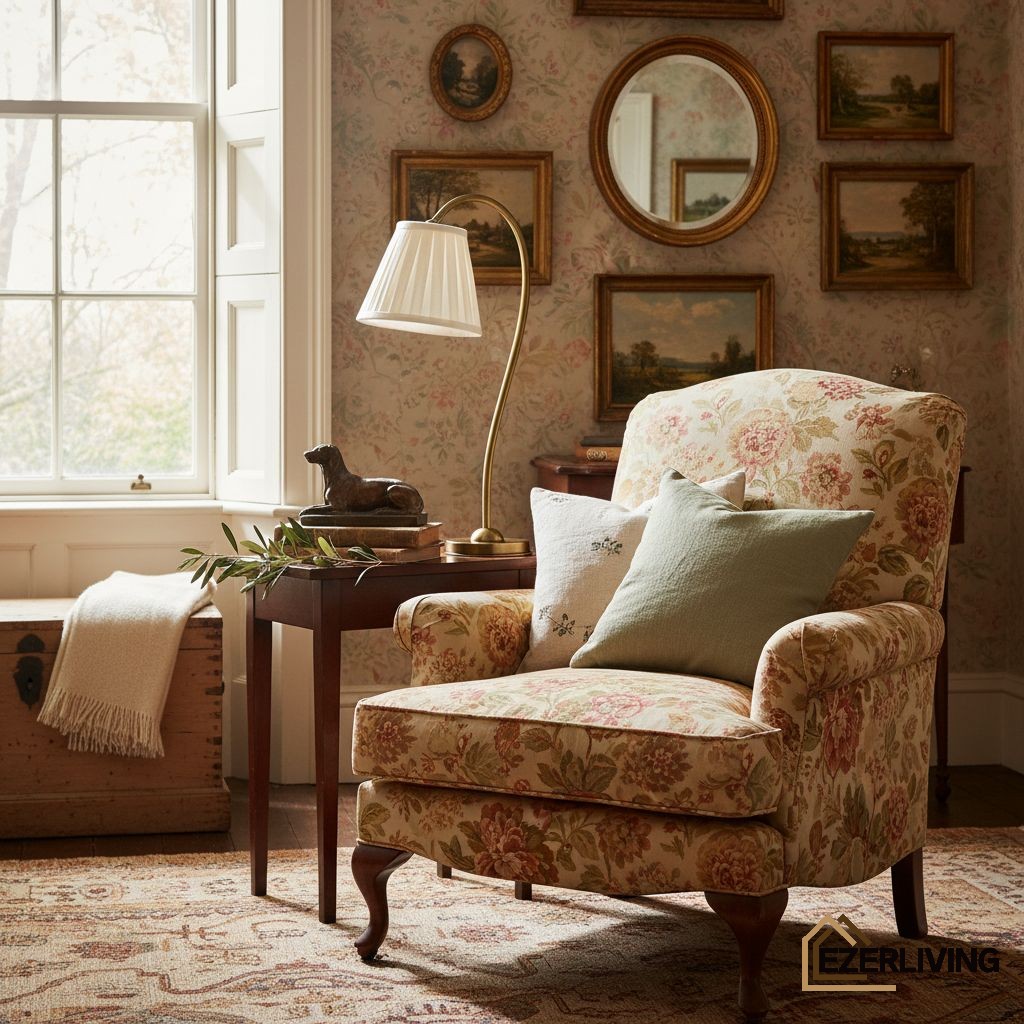
The fresher approach is selective nostalgia. Keep one object with history, or one form that recalls a traditional farmhouse, then let contemporary restraint surround it. An old pine table gains presence against a calm plaster wall. A rush-seated chair looks more interesting beside a clean-lined sofa than beside five matching rustic pieces. Clear wall and surface areas give texture and age enough visual room to register.
Softness Is Replacing Signage
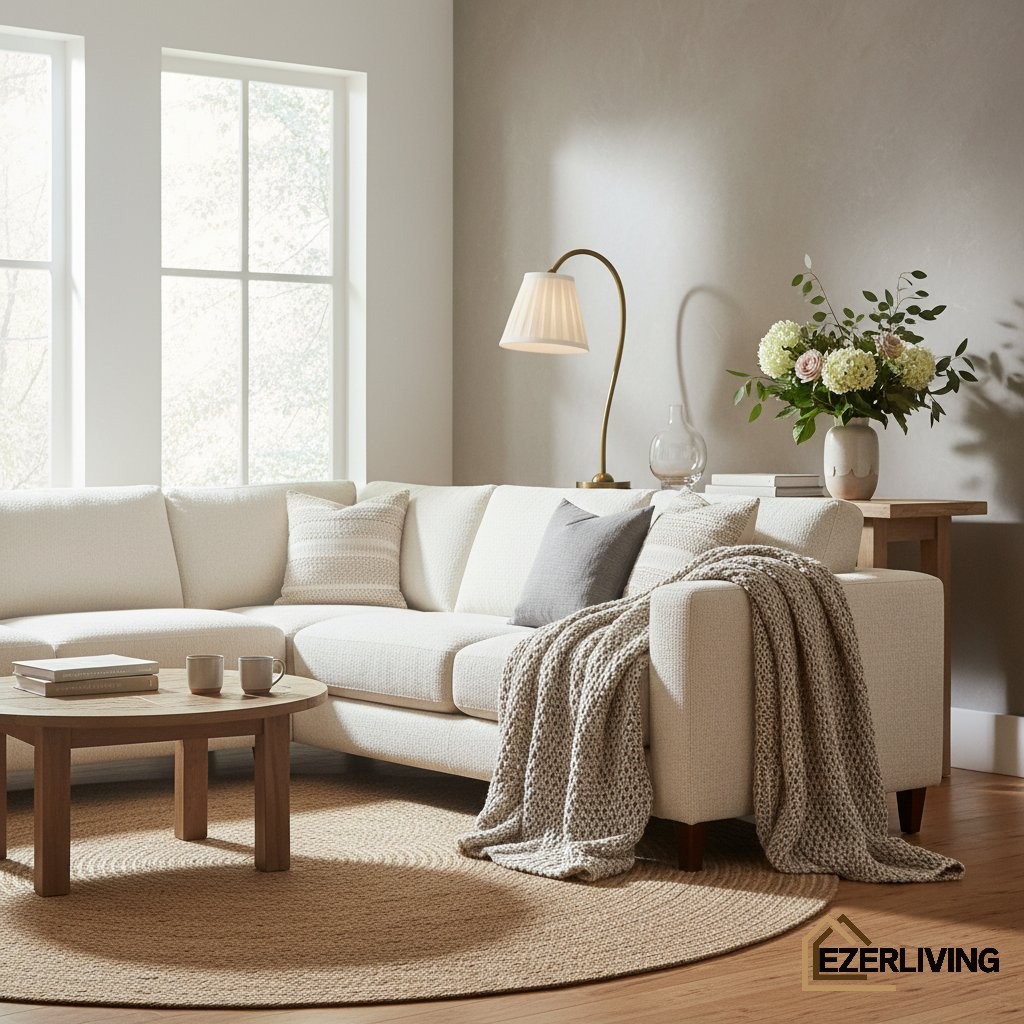
Textiles can carry the emotional work once assigned to decorative slogans. Washed linen curtains, a wool throw, a striped cushion or a pleated lampshade make a room approachable through touch and shadow. They do not have to say “gather” to suggest hospitality. Their folds, seams and slightly irregular surfaces already communicate domestic ease.
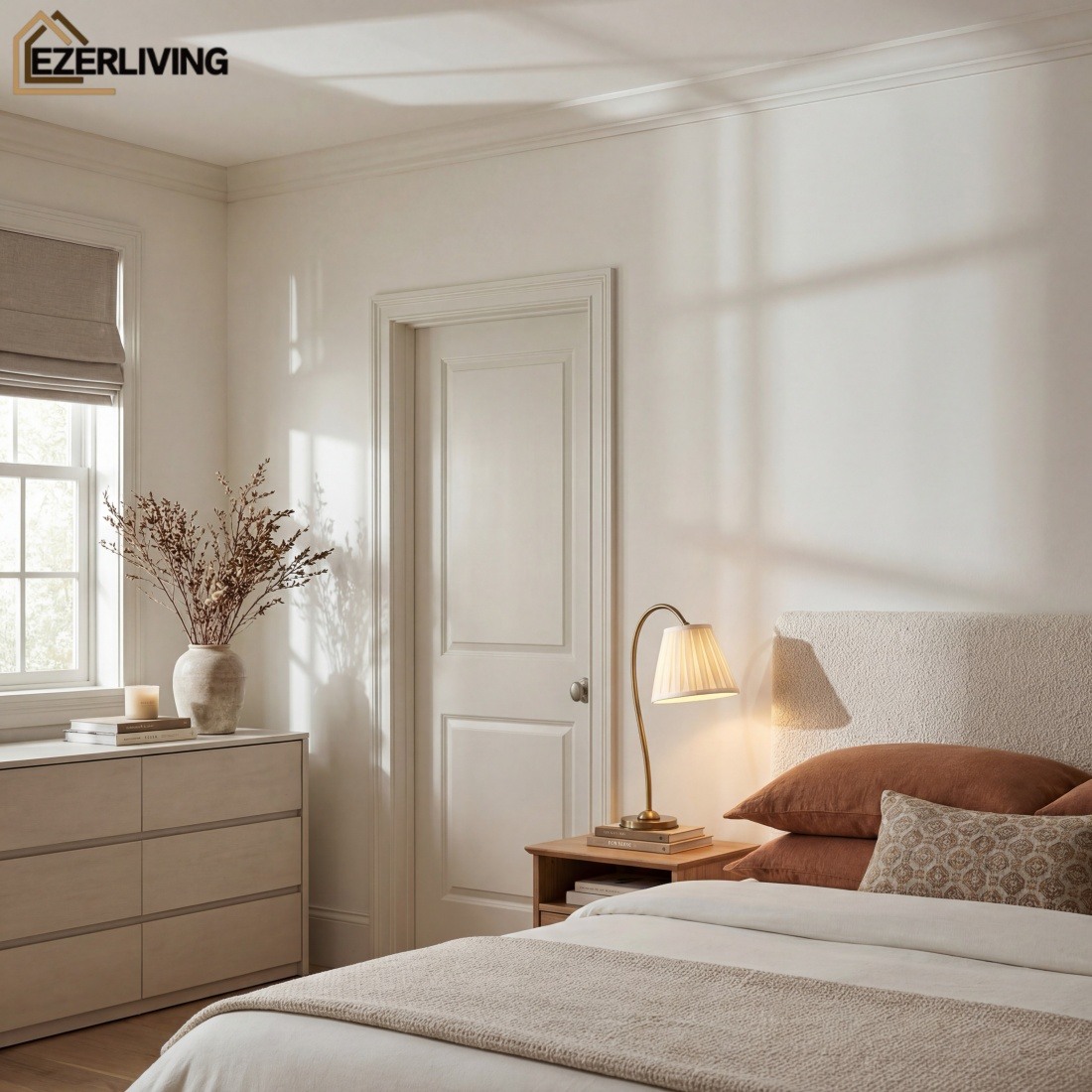
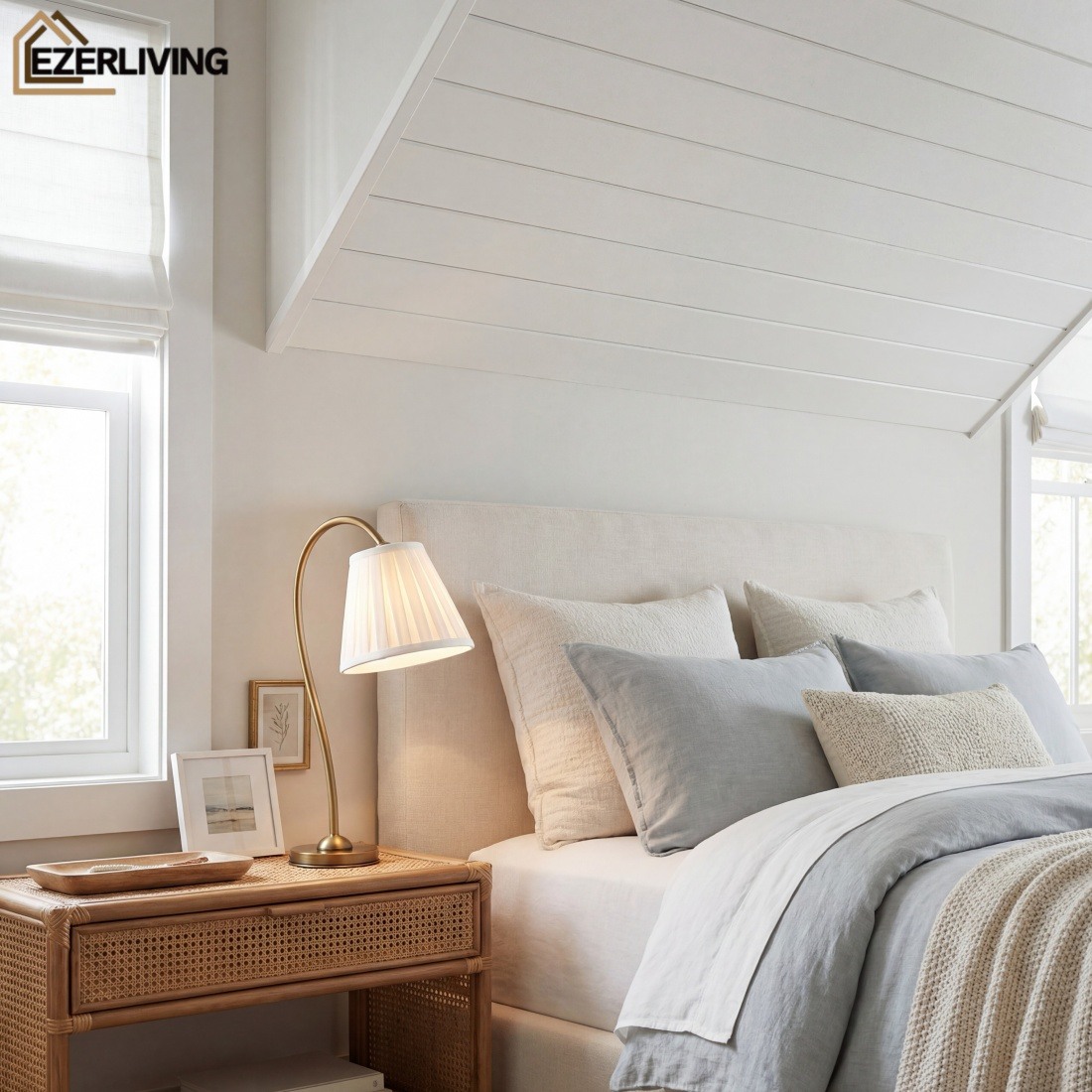
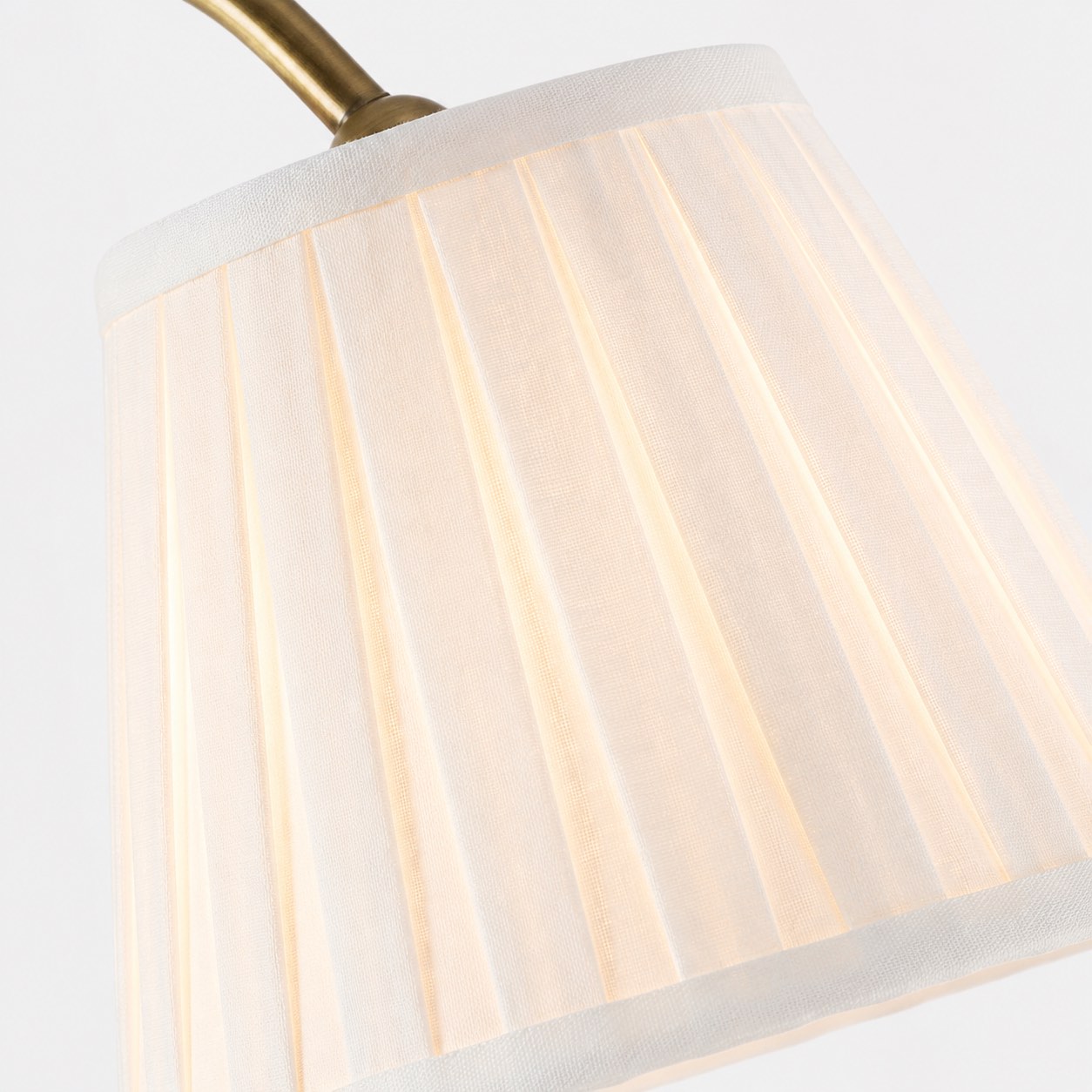
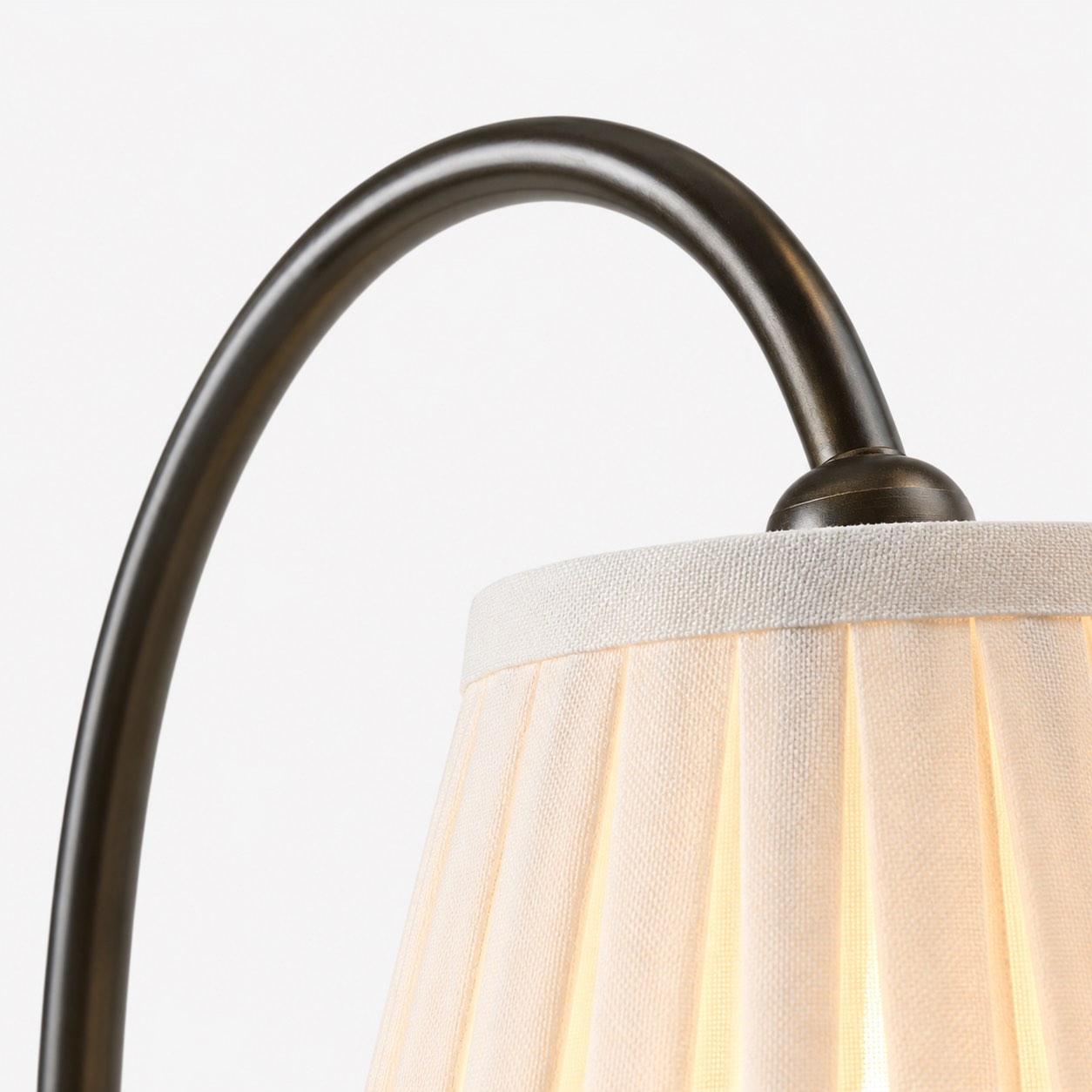
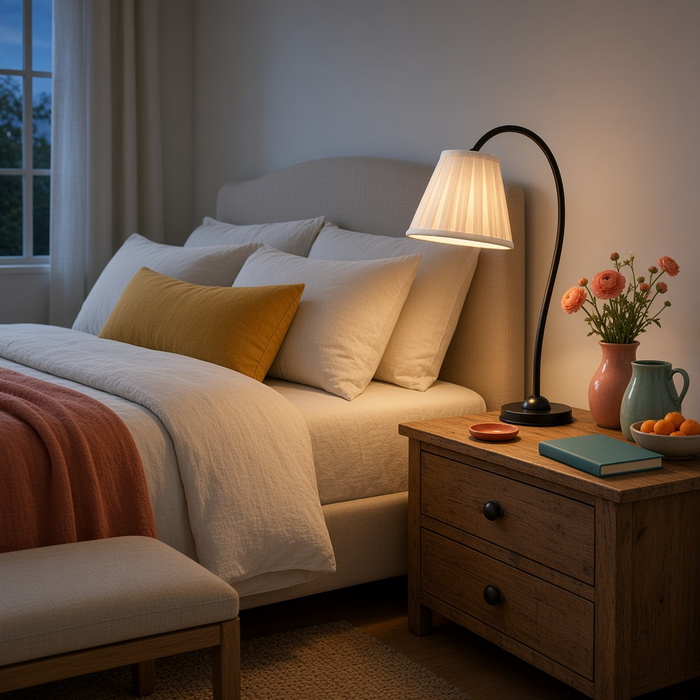
A pleated shade introduces a fine, regular pattern among broader expanses of timber, plaster and upholstery. In daylight, it reads as a textured object; after dark, the folds may remain visibly textured, depending on the bulb and the shade's construction. That detail pairs well with plain walls and uncomplicated furniture. It also brings necessary softness to iron or brass, preventing metal lighting from feeling industrial.
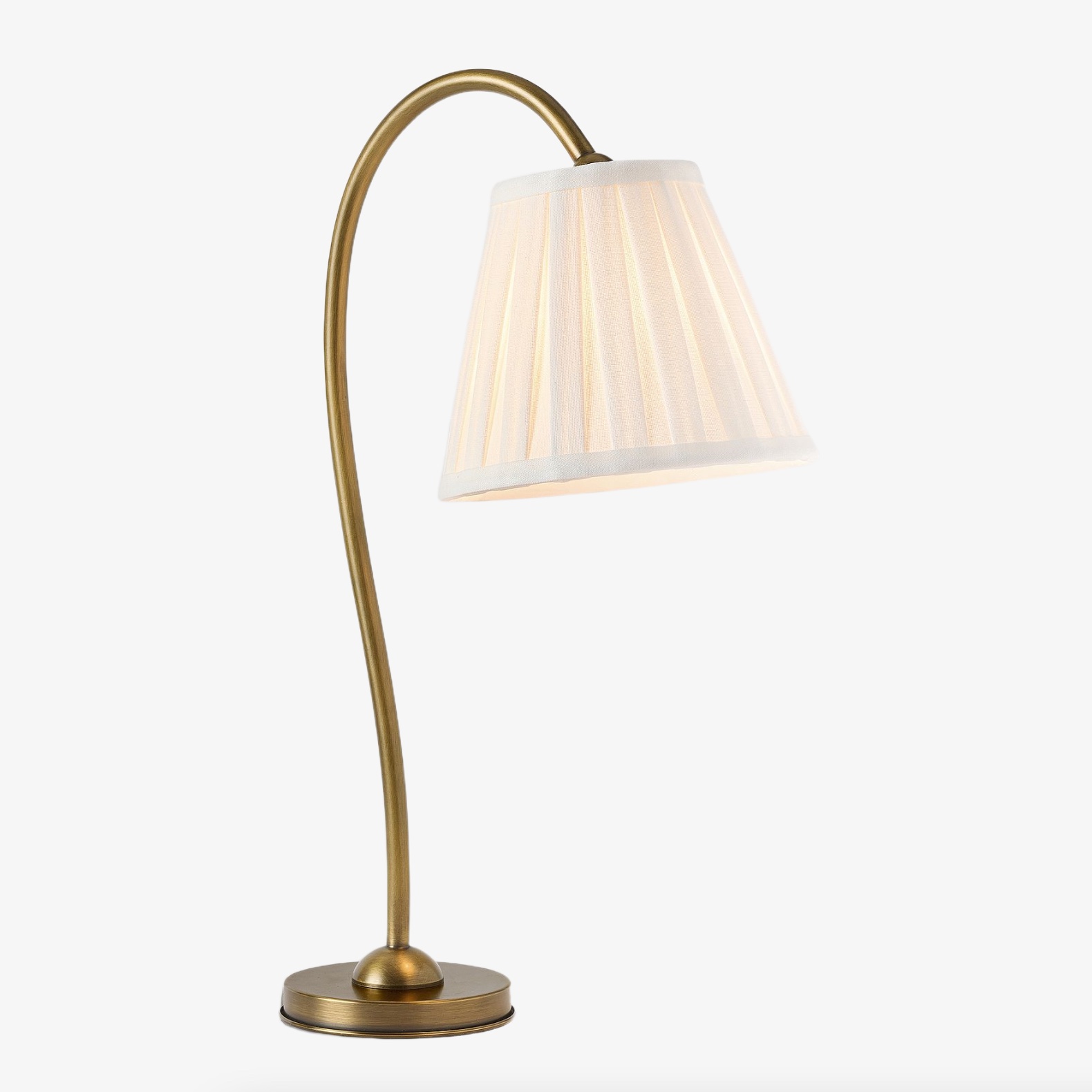
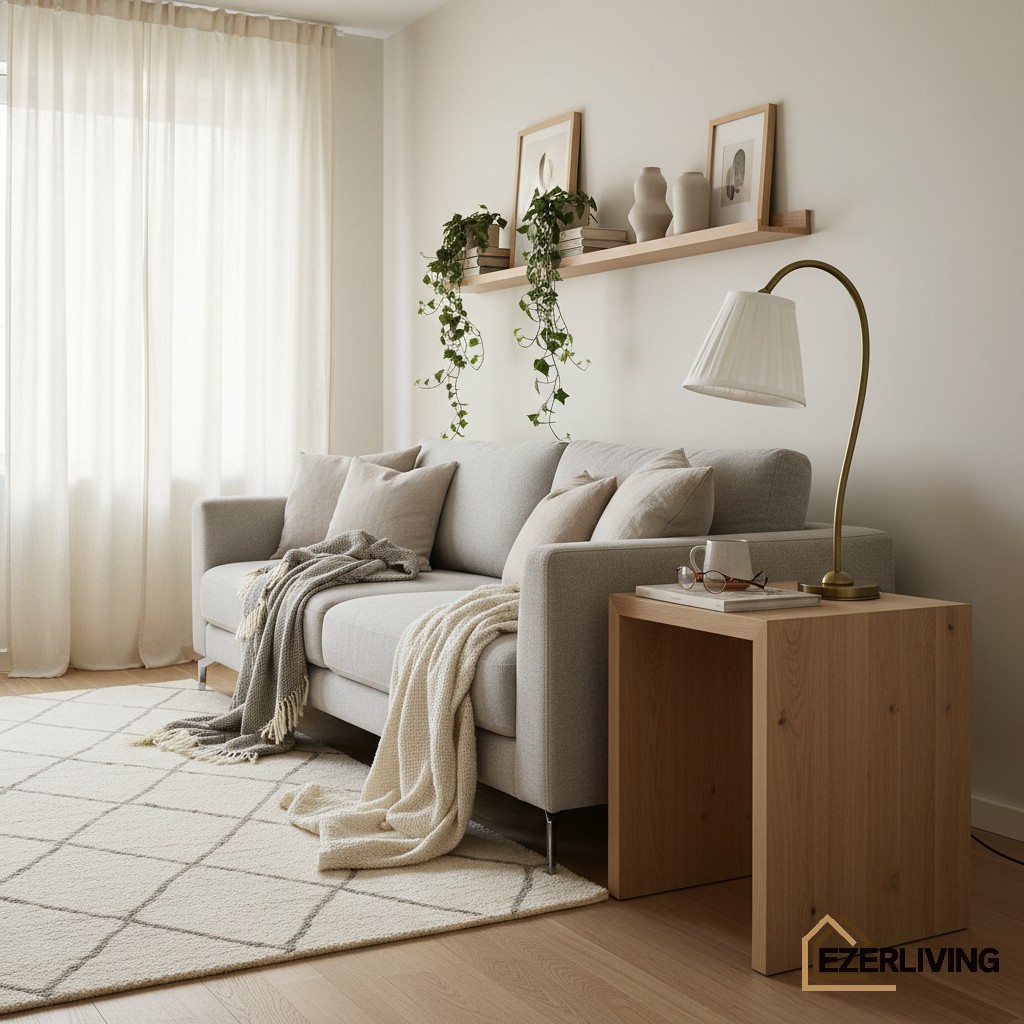
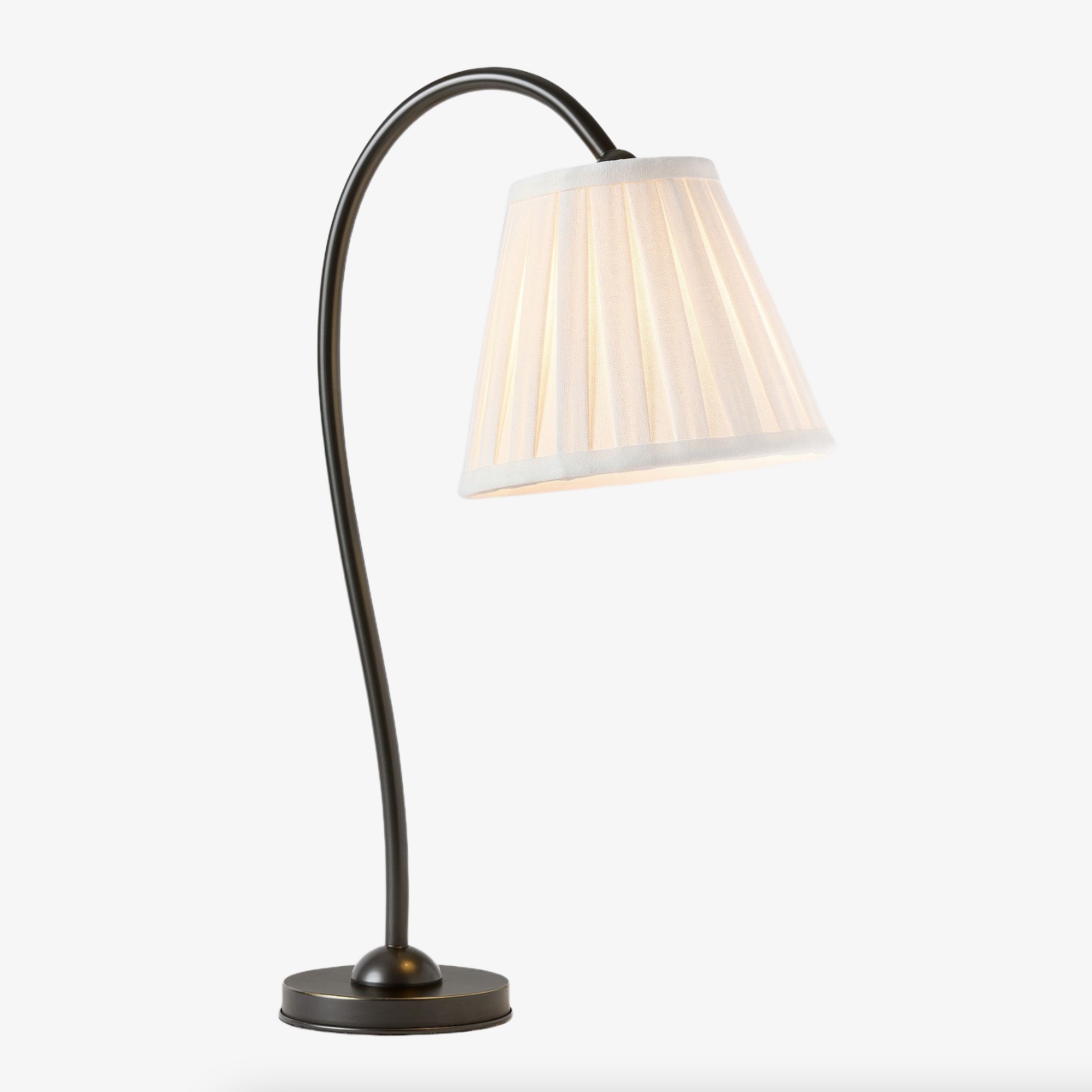
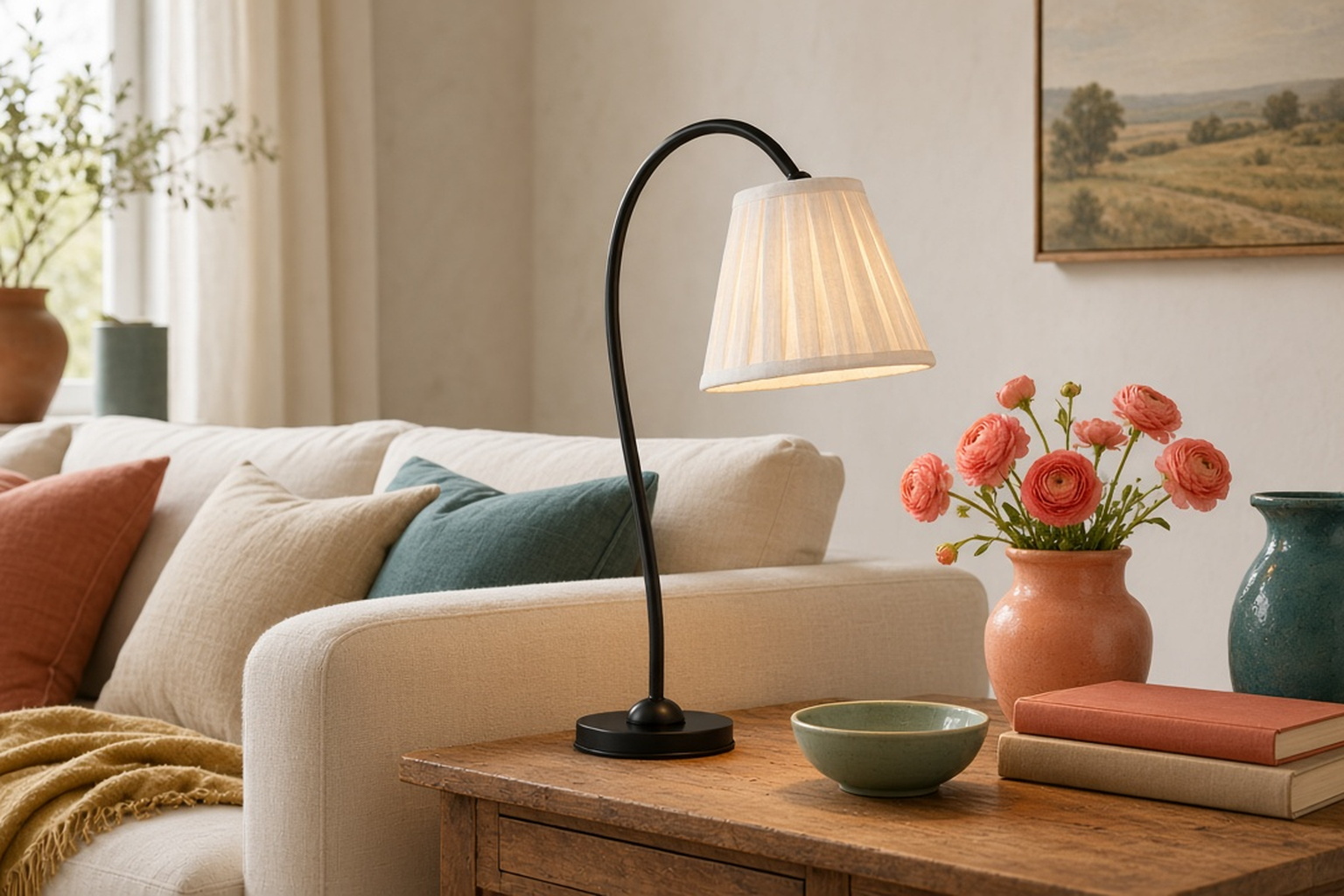
The Luvora table lamp offers this textile-and-metal contrast in a slim silhouette. Its listed metal body and pleated linen shade are more adaptable than a lamp decorated with motifs. The form can participate in a country room without locking every surrounding choice into the same style.
Pleated linen also needs a measured care routine; Pleats Look Beautiful Until Dust Moves In: How to Clean a Fabric Lampshade Safely explains how to lift dust without flattening the folds.
Honest Metal, Not Manufactured Patina
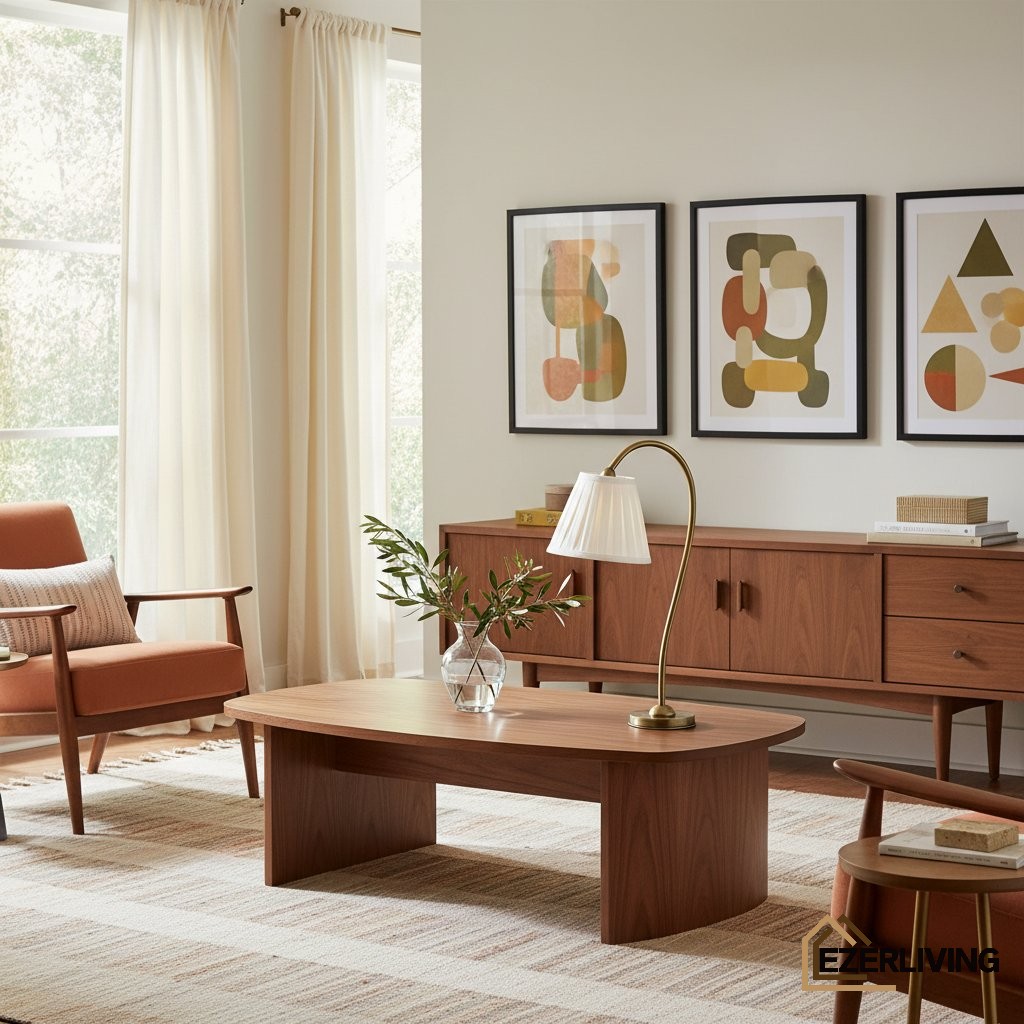
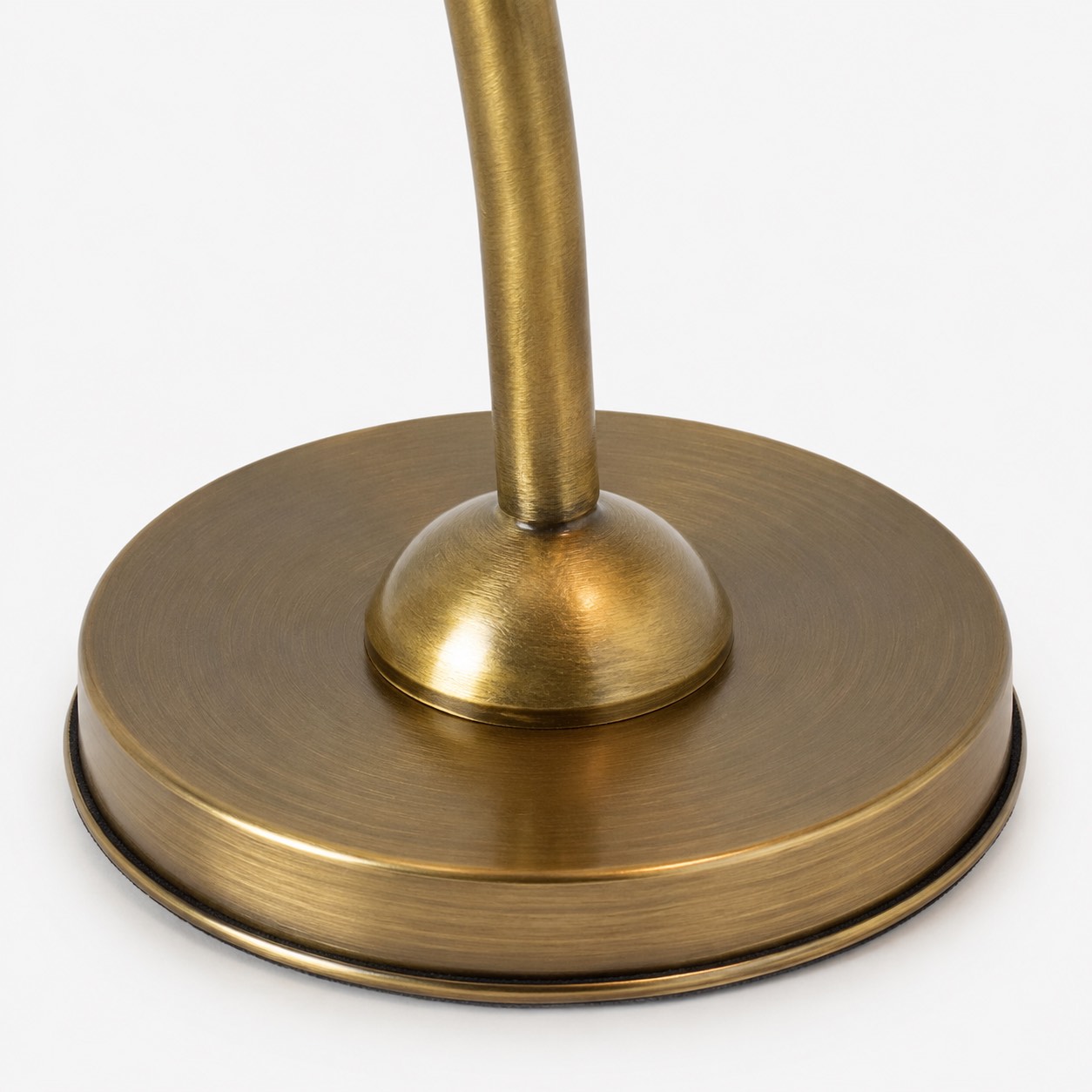
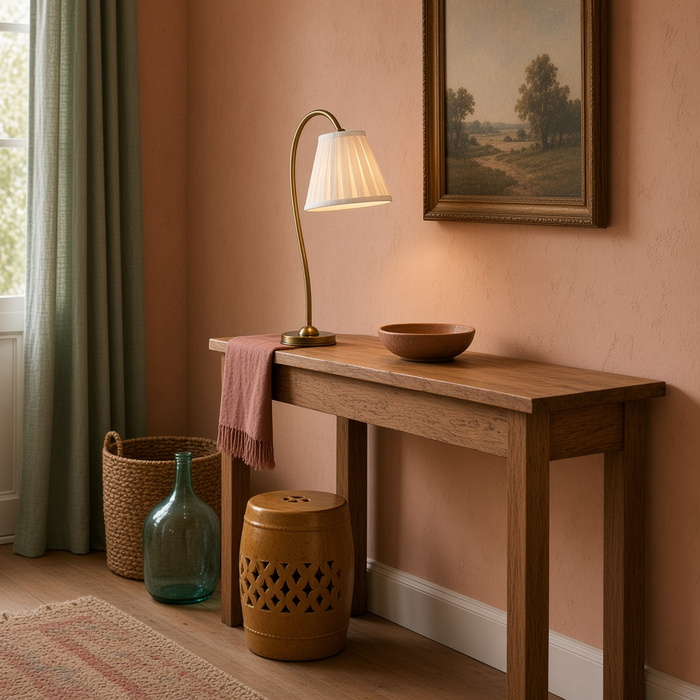
Metal belongs naturally in farmhouse interiors because it recalls practical hardware, candlesticks and workshop fittings. The contemporary difference is honesty. Rather than adding layers of fake corrosion, allow the finish, profile and junctions to speak. A tumbled brass tone can warm pale timber and chalky paint; matte black can outline a composition where there is already plenty of softness. Either direction works best when repeated sparingly, perhaps once in a lamp and again in a curtain rod or cabinet pull.
Proportion is more important than decorative detail. The Luvora is officially listed at 50.8 cm high, 22.7 cm wide and 12.7 cm deep. That narrow depth makes it worth considering on a console, bedside table or compact occasional table, provided the surface has enough room for the lamp and daily objects without crowding. Check the lamp dimensions and available finishes against your furniture before treating a photograph as a promise of fit.
Mixed-Age Furniture Makes the Room Credible
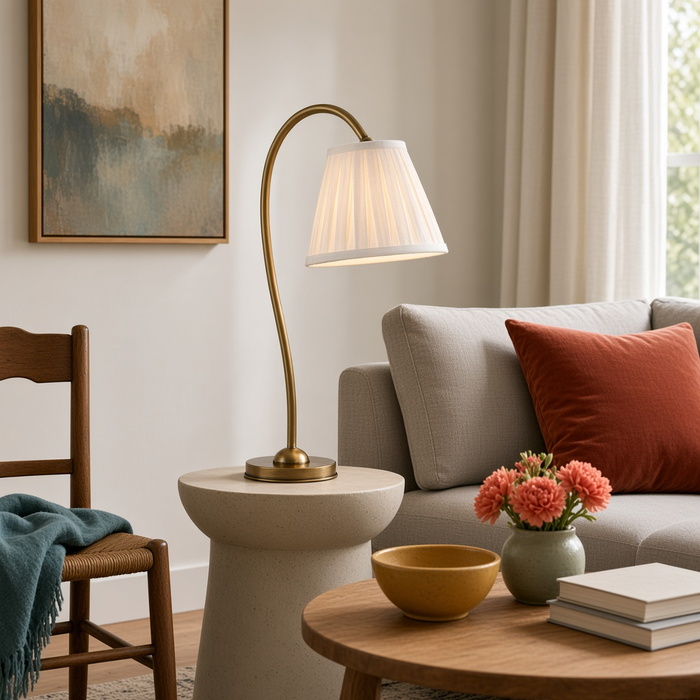
A convincing country interior rarely looks as though every piece arrived in one delivery. Mix age deliberately: a vintage chest beneath a contemporary artwork, a crisp upholstered chair beside a scarred side table, or a new console under an inherited mirror. The contrast makes genuine wear meaningful and keeps new furniture from looking anonymous.
Build Around One Quiet Tension
Choose one material opposition and let it organise the room. Rough oak against smooth ceramic is enough. So is blackened metal beside loosely woven linen. Avoid stacking every rustic texture in one corner. If the table is heavily grained, a simple lamp base and tailored shade provide relief. If the furniture is refined, a hand-thrown vessel or old basket can introduce irregularity. Together, these contrasts give the room a country character that feels accumulated and specific.
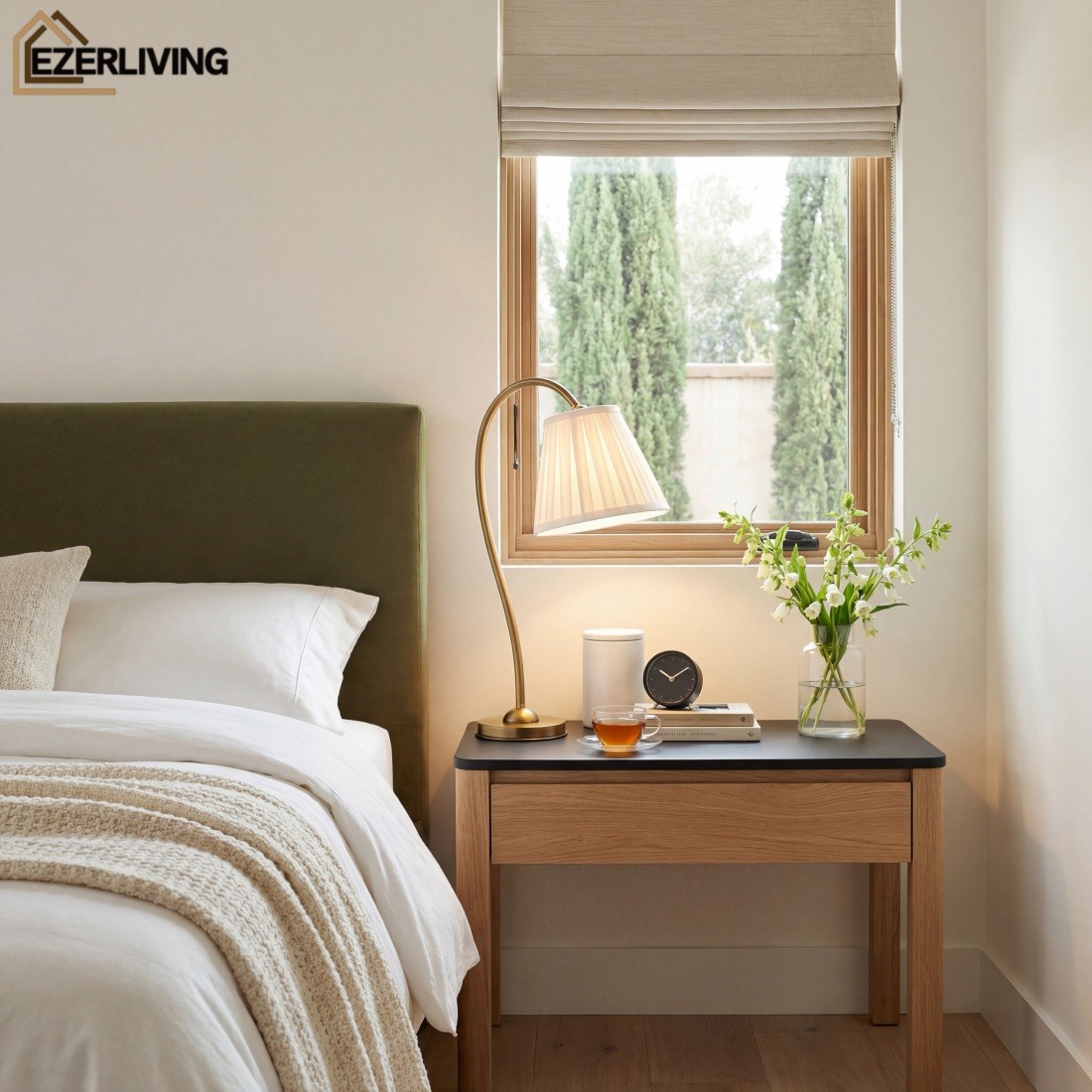
This is also why negative space deserves to be designed. Leave part of a console clear. Let a lamp stand slightly off-centre with one low object rather than a symmetrical parade of accessories. The empty surface becomes part of the arrangement, and the pool of light has a boundary instead of dissolving into clutter.
Give the Room More Than One Pool of Light
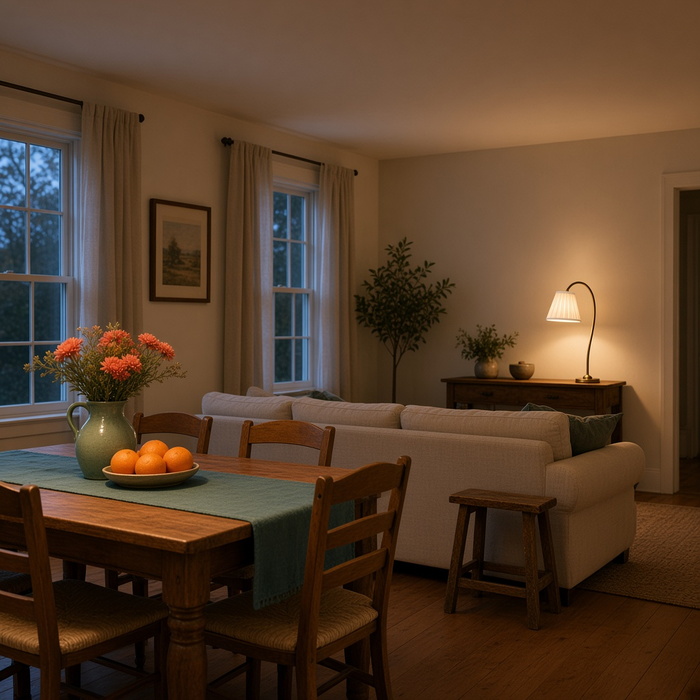
A country room gains depth when a bright work surface, a shaded corner and a low warm lamp are allowed to coexist. Build that effect with several light sources at different heights. Ambient light establishes safe movement; task light supports reading or preparation; low table lamps give evening its visual anchor. Pools of light should overlap gently without eliminating every shadow.
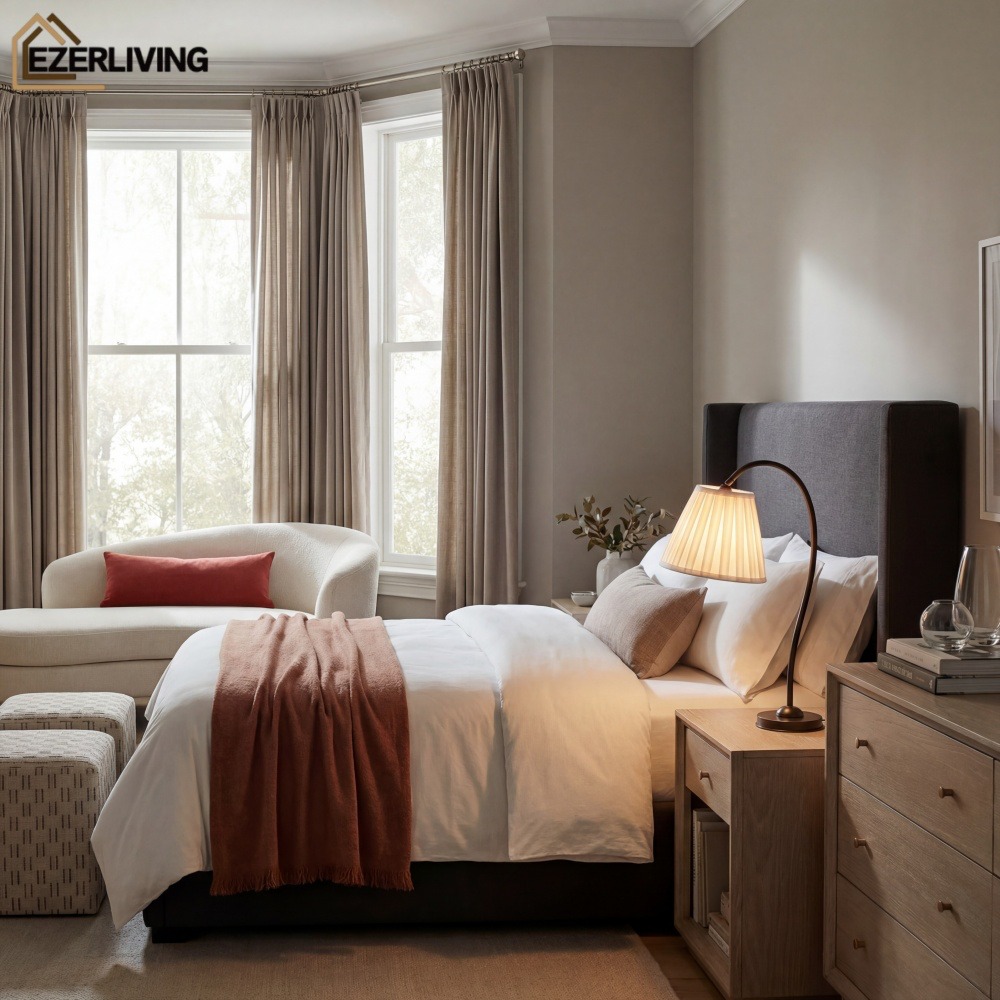
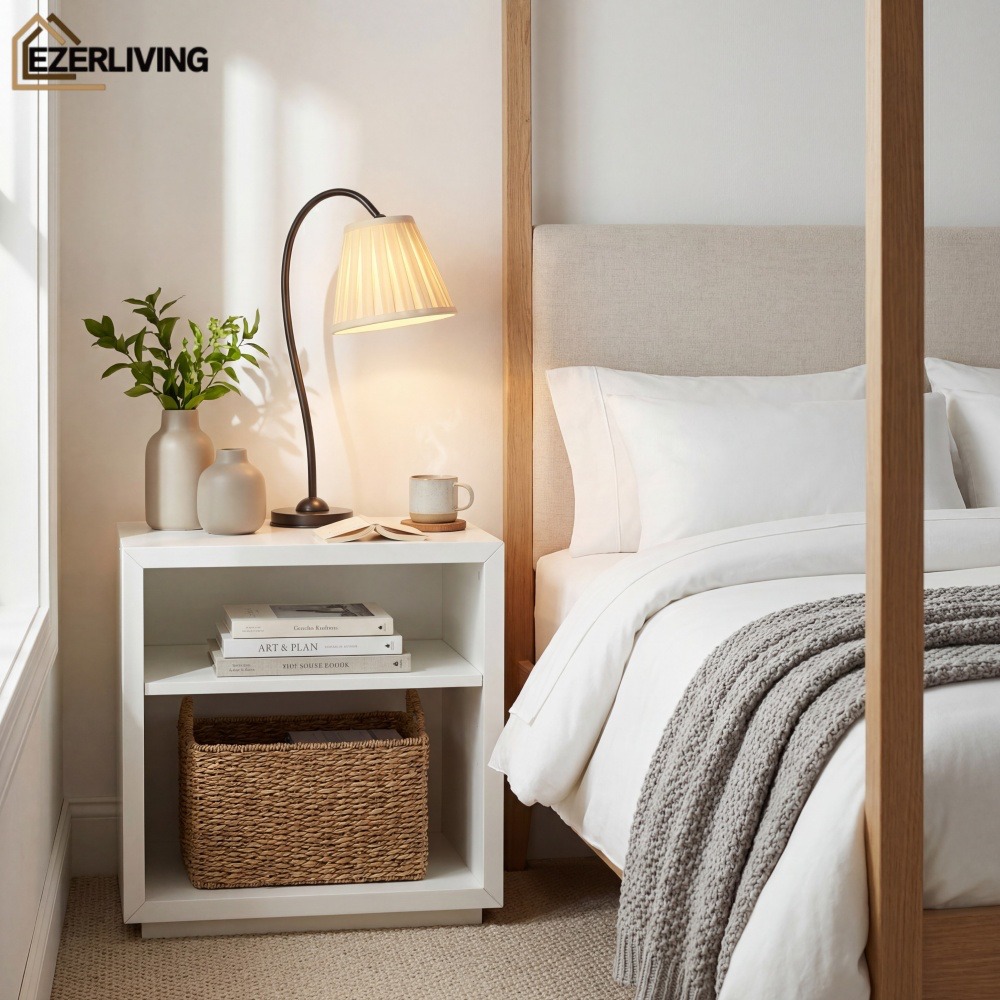
Placement sets the hierarchy. On a console, position a lamp near the end that needs visual weight, then balance it with art or a vessel rather than a matching lamp by default. At a bedside, consider the relationship between shade height, mattress and the reader's eye, and make sure controls are reachable. On a side table, the shade should not block conversation sightlines. The lamp's 50.8 cm height is a fact; suitability depends on the furniture and the person using it.
For a compact layer of warm visual texture, consider the Luvora as an accent lamp, then assess bulb choice and output separately because those details are not verified on the product page. A bulb is not included, and the listed base is E12, so confirm compatible specifications before purchase. Avoid assuming dimming or a particular colour temperature.
Let Light Reveal the Materials
Think about what the beam meets. Light grazing across limewash or visible timber grain produces more depth than light aimed at a television. A fabric shade beside folded linen creates a soft sequence; a metal base against stone introduces a clean edge. Keep glossy surfaces limited if the goal is a relaxed room, as repeated bright reflections can disturb the calm that farmhouse style is trying to recover.
For a circulation-space version of this approach, How to Turn an Overlooked Stair Landing Into a Decorative Moment With a Table Lamp applies the same restraint to scale, glare and cord placement.
Small Decisions That Keep Nostalgia Selective
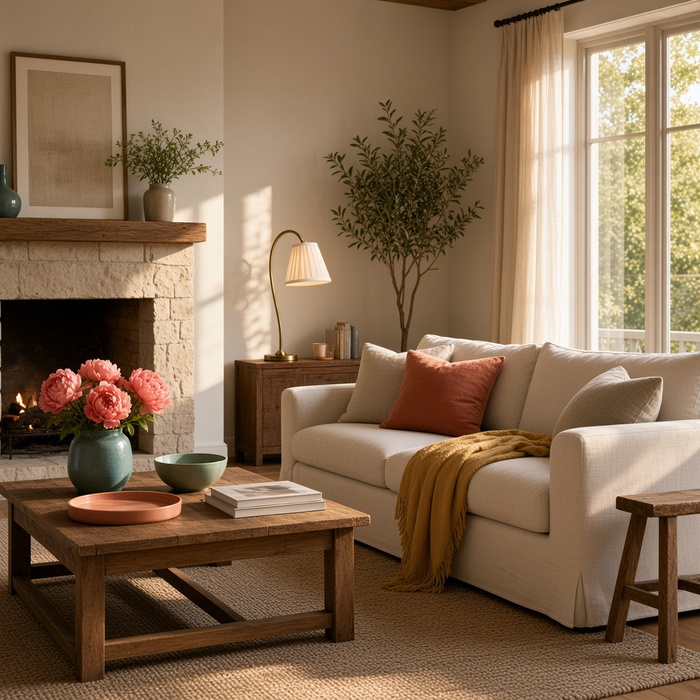
Start by removing objects that exist only to label the style. Then edit repeated distressing, keeping the pieces whose age or craftsmanship is genuinely interesting. Introduce softness through curtains, upholstery and shades, but vary their weave and scale. Use metal as punctuation. Finally, light the room at several heights and observe it after sunset, when decorative excess and poorly placed glare become easier to see.
Questions for a More Grown-Up Farmhouse
Can a room feel farmhouse without reclaimed wood?
Yes. Country character can come from useful forms, natural fibres, plain joinery and a warm lighting hierarchy. Reclaimed timber is one possible ingredient, not an entry requirement.
Should every metal finish match?
No. Two compatible finishes often look more collected than a perfect suite. Keep their undertones related or repeat each finish at least once, and avoid introducing so many that the room loses a clear visual order.
Where should the nostalgic element go?
Place it where it can hold attention without being surrounded by supporting props: an inherited chair near a reading light, an old landscape over a new console, or a well-used table in an otherwise restrained dining area.
Is a pleated shade automatically traditional?
No. Context changes it. Beside a slim metal base, clear surface space and cleaner furniture lines, pleating contributes a quiet textile detail. The scale and surfaces around the lamp decide how traditional the overall composition feels.
Country Style, With Room to Breathe
The most persuasive farmhouse rooms now communicate comfort indirectly. Honest materials replace imitation age; textiles replace slogans; a few meaningful old pieces sit among useful new ones. Lighting completes the change by creating islands of attention rather than flooding every surface equally. Once the symbols are removed, what remains is stronger: texture, proportion, shadow and the familiar pleasure of a room that feels ready to be lived in.